Monday, September 11, 2006

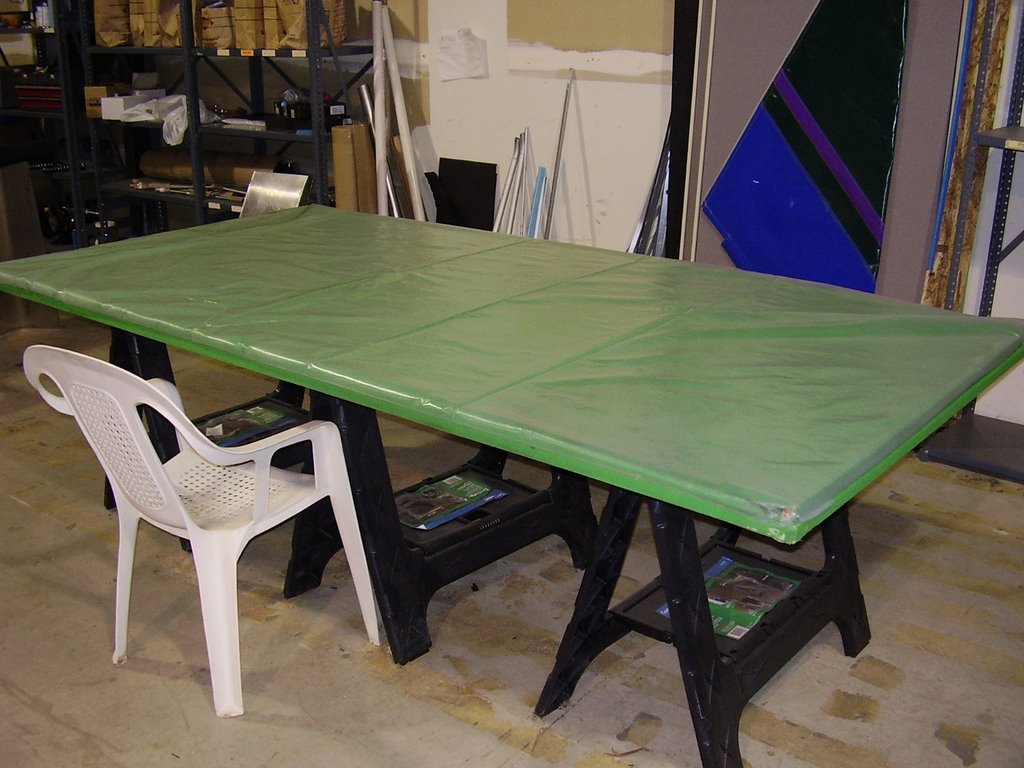
Belly Pan Fabric Gluing - 2 hour (352 Total)

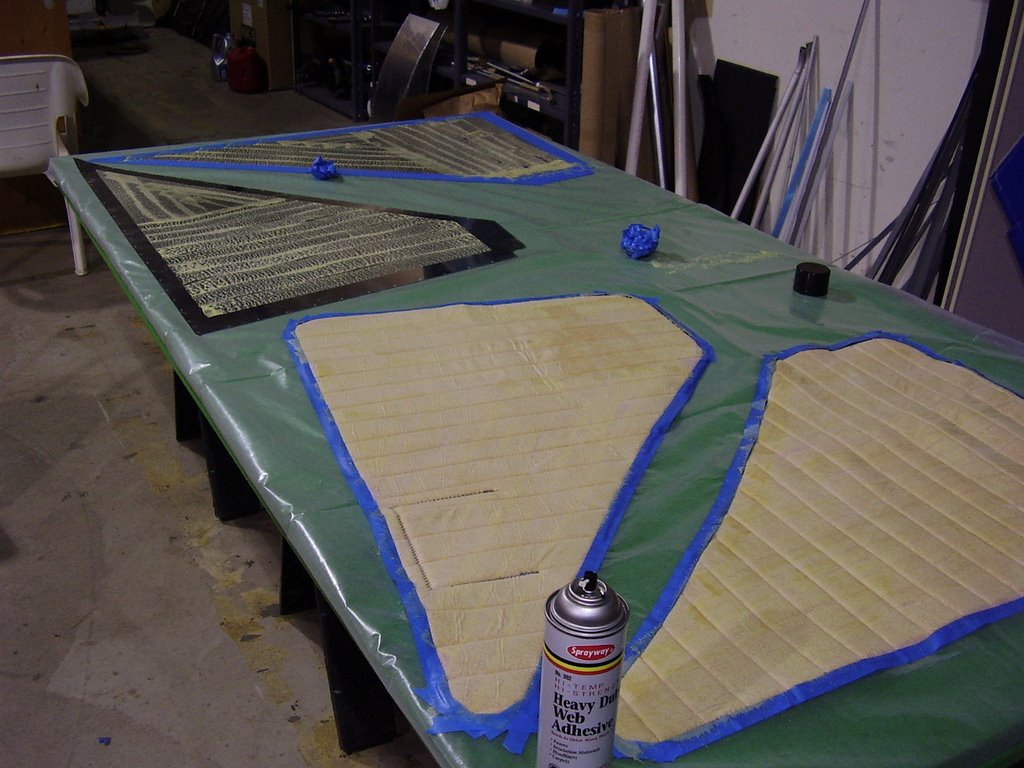
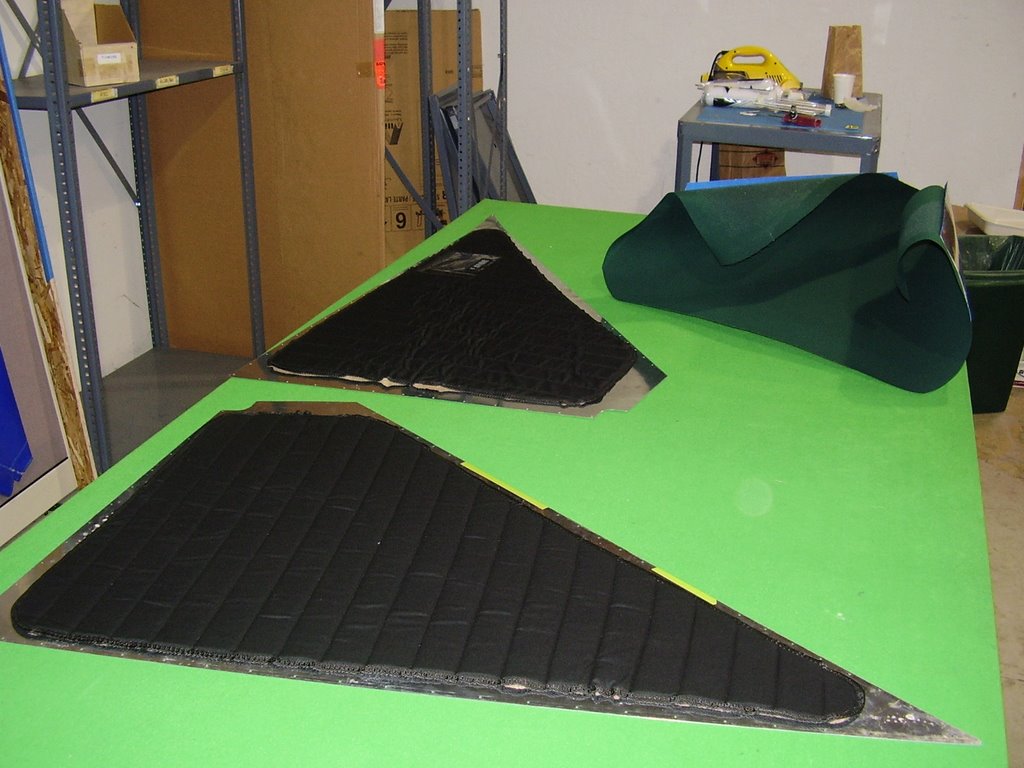
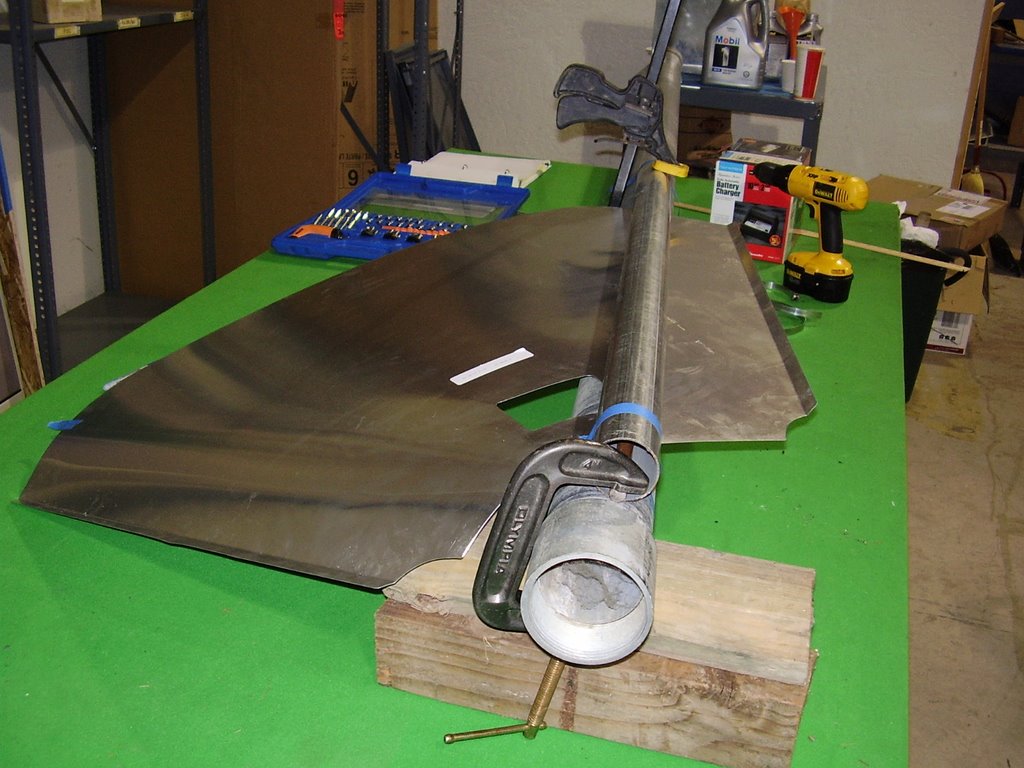
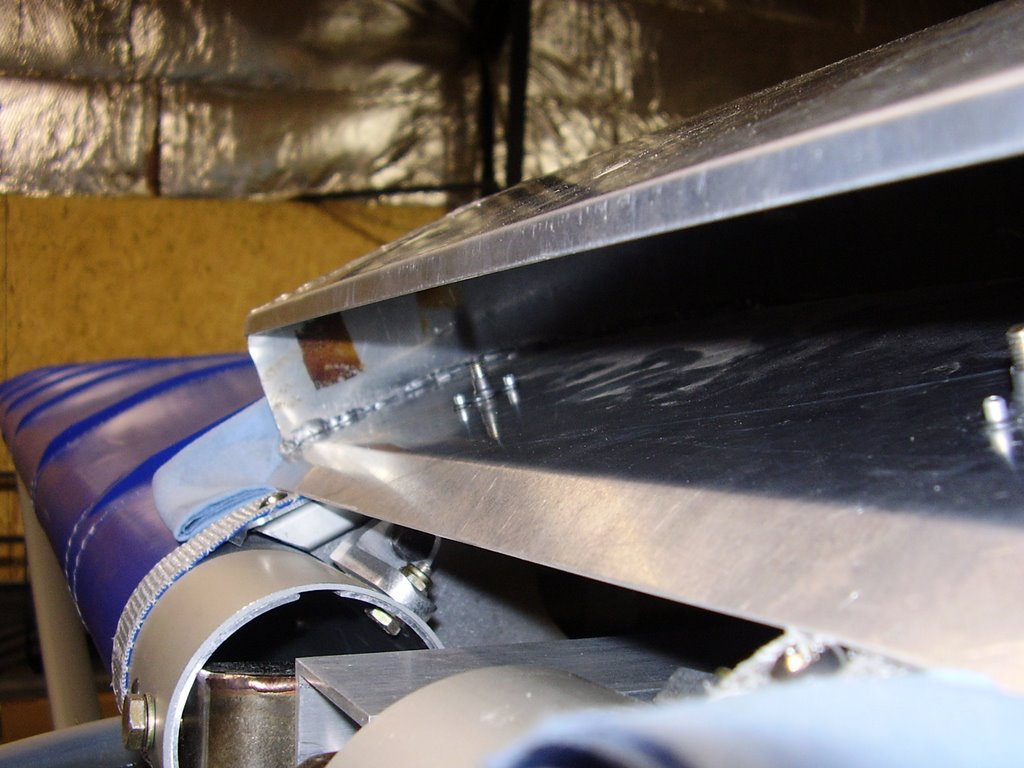
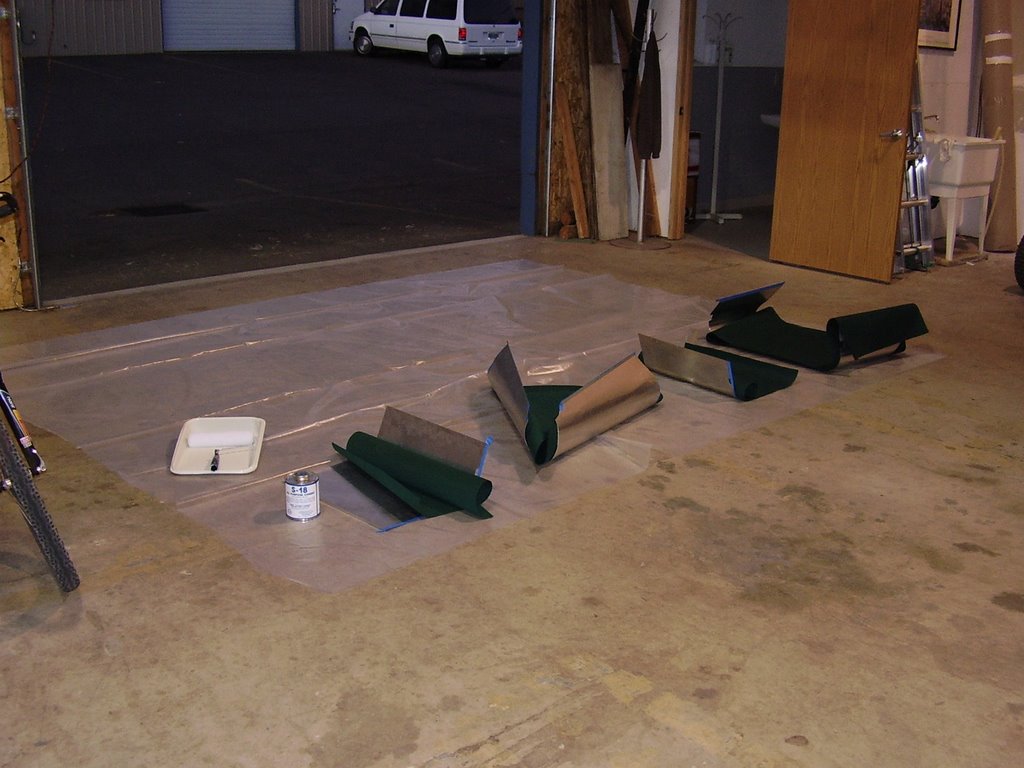
Today I glued my fabric to the belly pans. I used a heavy duty role on glue called S-18. This product worked very well on my canvas type fabric. This glue would not work very well on a felt type fabric because the fabric would absorb too much of it off the roller. I found this to be the case when I tried to apply the glue to the sound proofing material that goes on the side panels.

A spray on adhesive worked well for the sound proofing fabric. I masked off the outside edges of the sheet metal and sound proofing fabric to counter any over-spray. I removed the masking immediately after spraying on the adhesive.

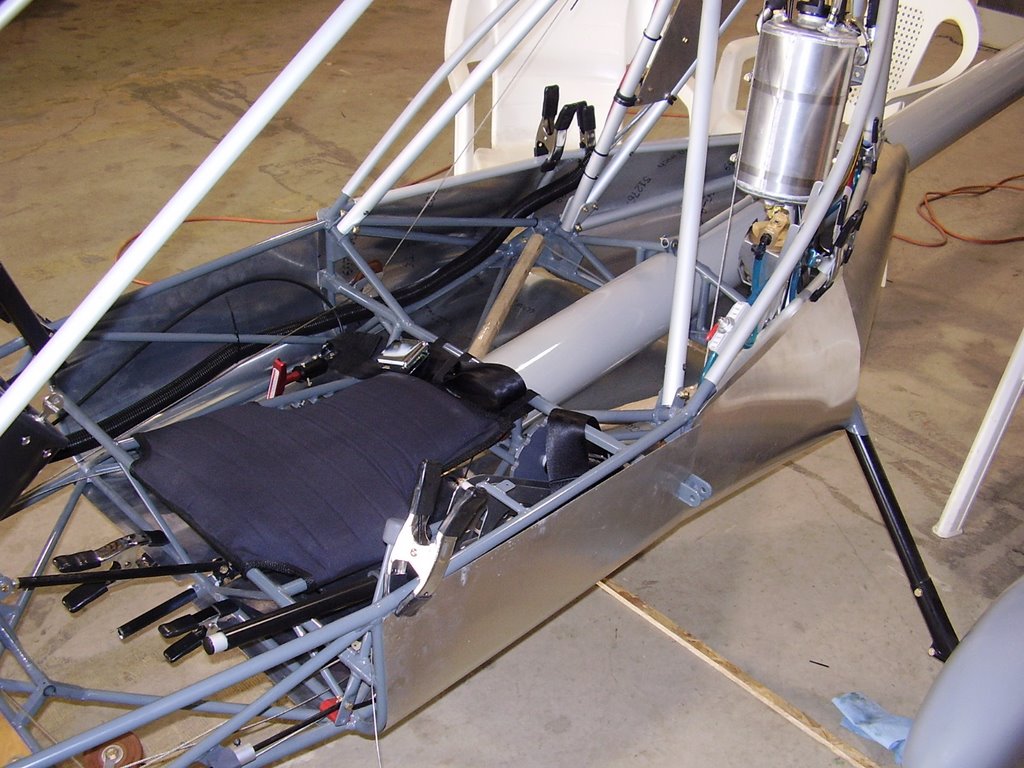
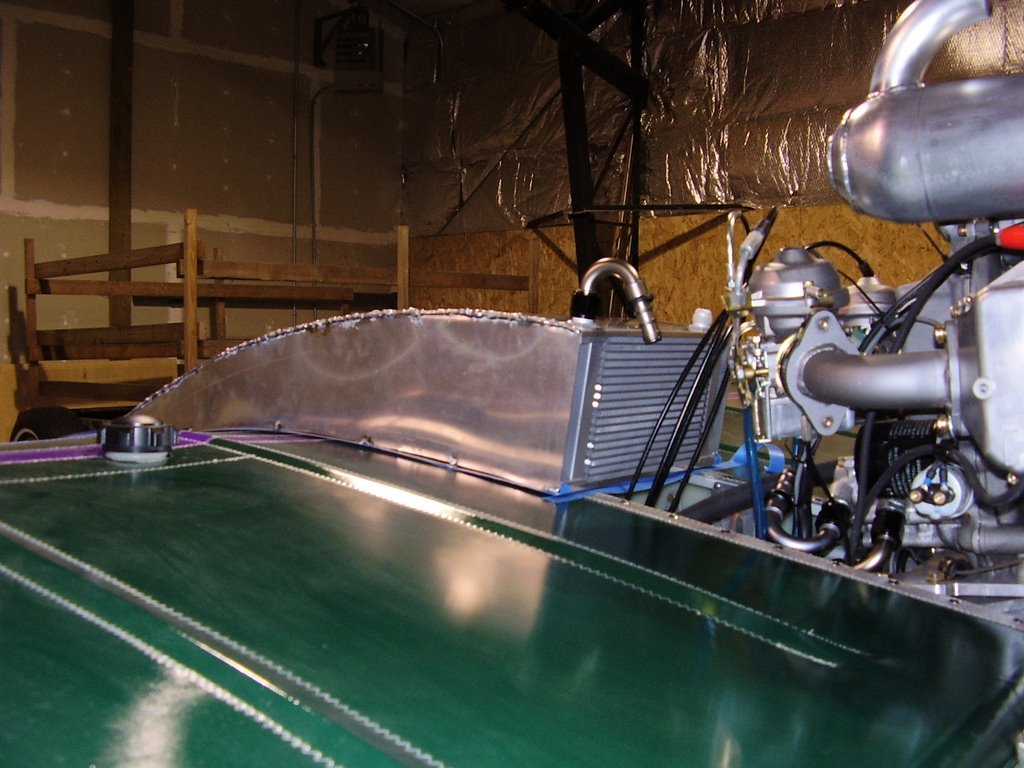
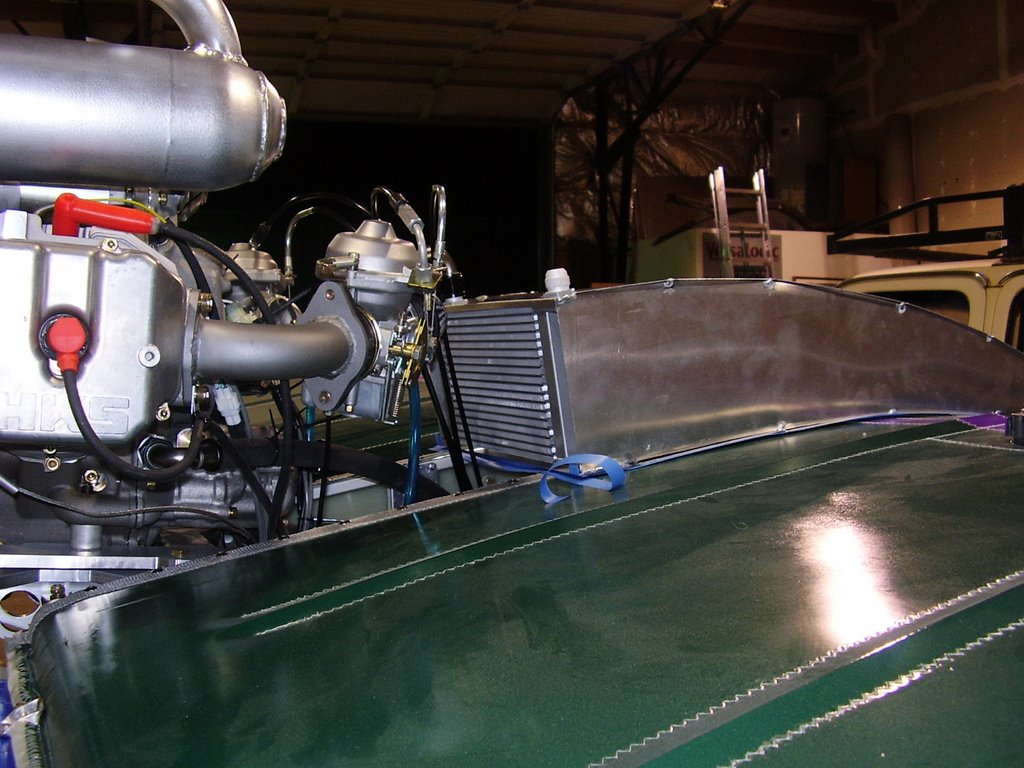
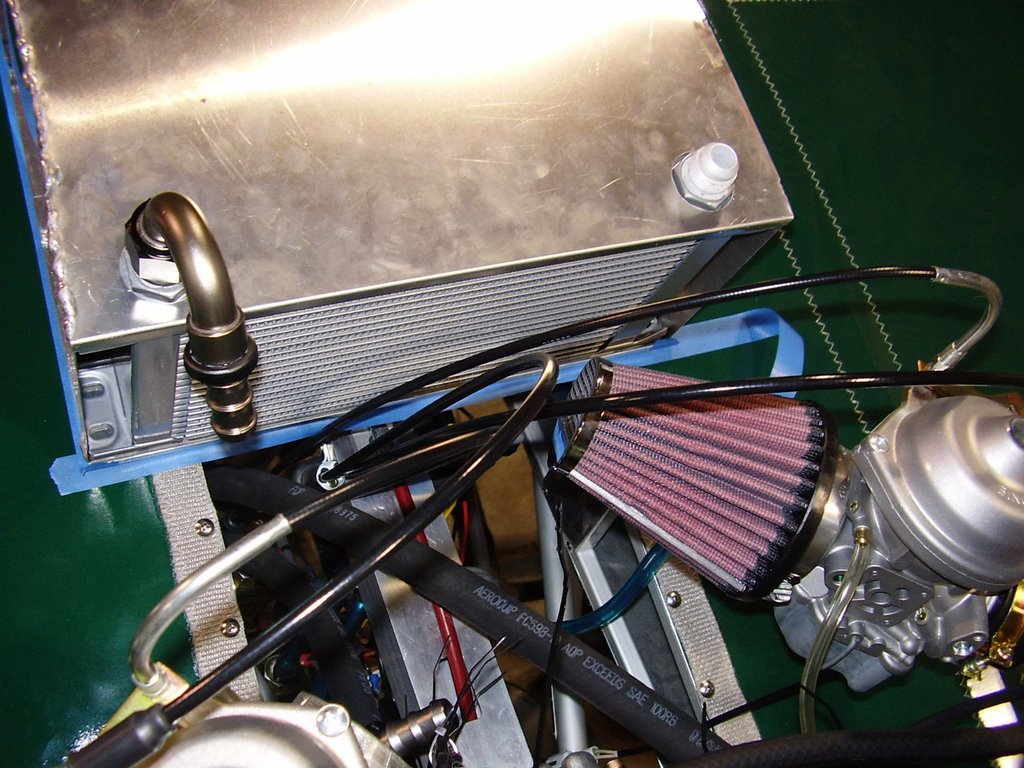
Below you can see some photos of my setup and results.


Sunday, September 10, 2006

Belly Pan Fabric - 1 hour (350 Total)

I was planning to glue my green fabric to the inside of my belly pan sheet metal today but I had forgotten to buy glue. All I was able to do was rough cut my fabric to the proper sizes and mask off the portions of the sheet metal I didn't want glue to adhere to. I'll pick up some glue tomorrow.

By the way, I'm at 350 hours; shouldn't I be done already!?
Belly Pan Cover - 0.5 hours (349 Total)

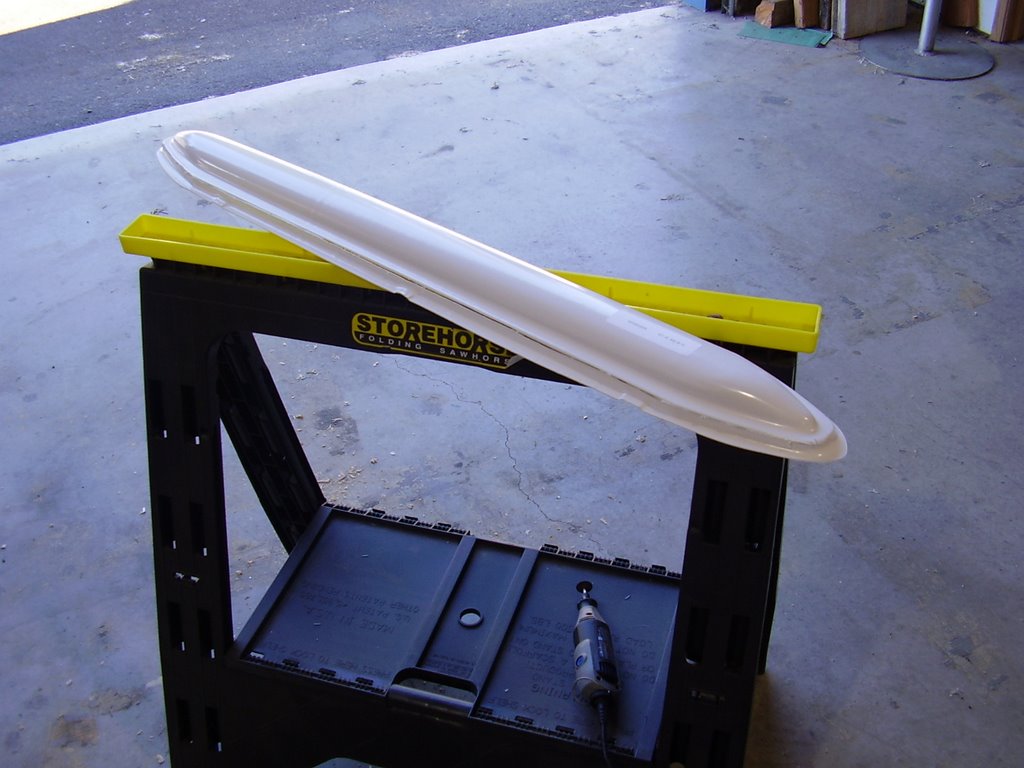
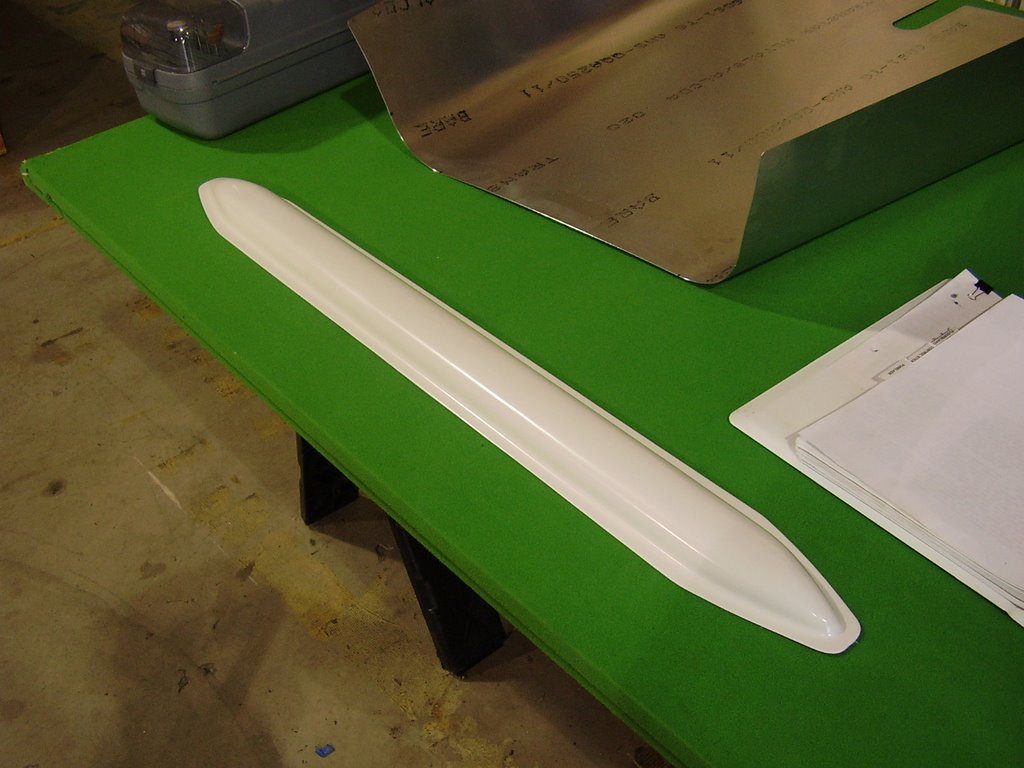
One of the other things I did today was prep the Belly Pan Cover. This plastic piece covers the elevator push pull rod that protrudes from the bottom of the plane.

The Pan come rough cut from Rans and needs to be trimmed to the proper size. This is similar to the plastic ribs that are used in the horizontal and vertical stabilizers. I used my dremel tool to cut and smooth the pan into the proper shape. I also roughed up the inside so I can paint it. I use a can of spray paint to paint the inside of the pan prior to installing it into the plane.


Cowl Clean Up - 0.5 hours (348.5 Total)

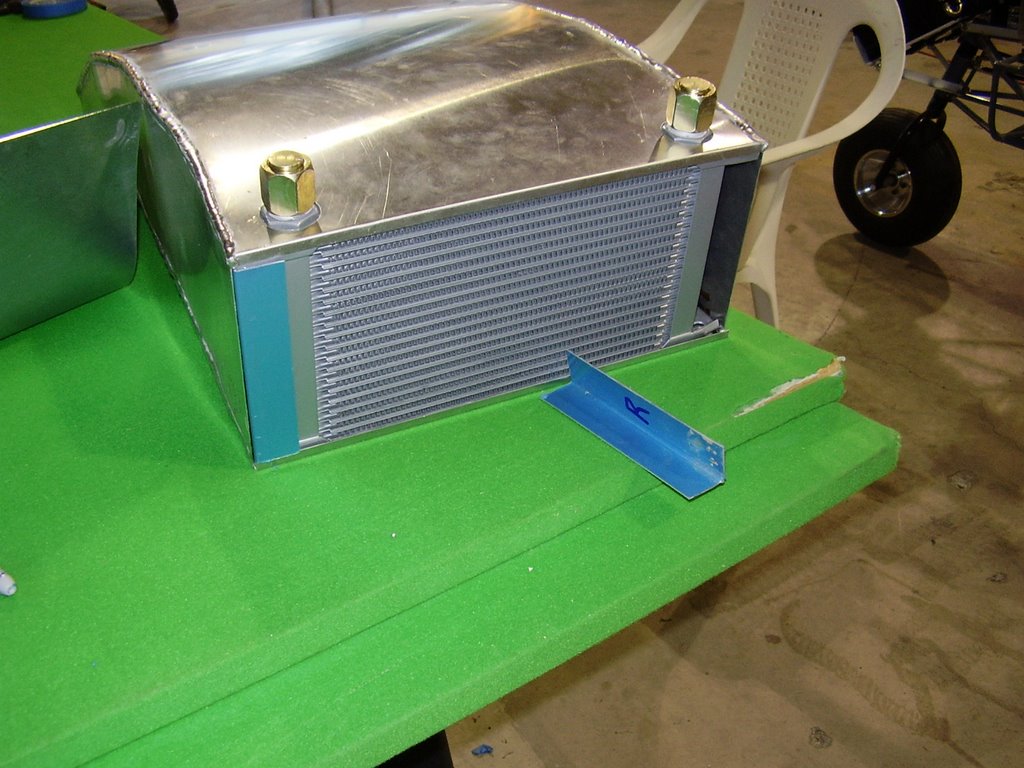
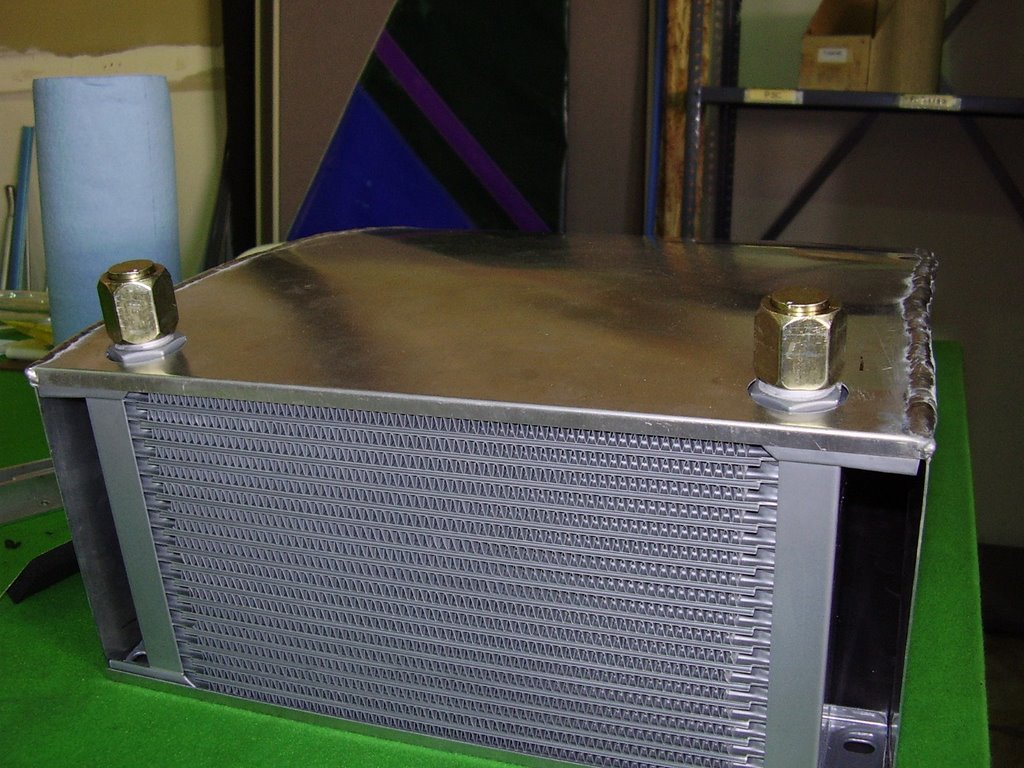
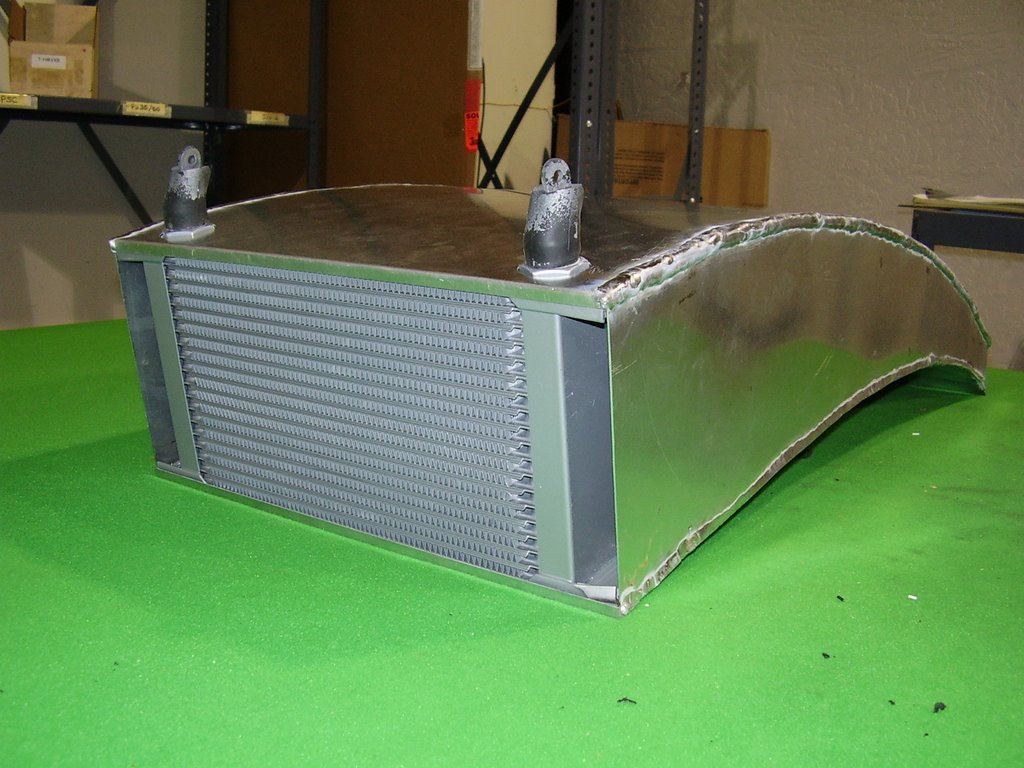
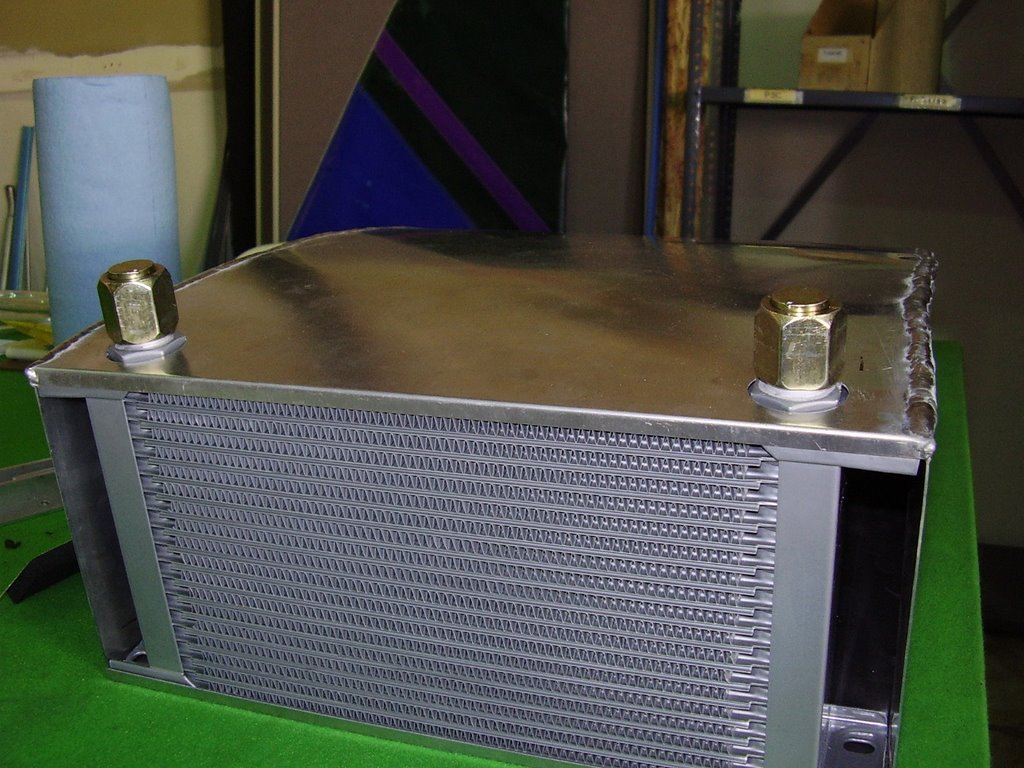
My oil cooler cowl needs a little more work prior to painting. The front corners need to be rounded off to prevent them from damaging the wing fabric and the gaps in the rear need to be filled. I also need to secure the cooler inside the cowl.

I think I will have the welder tack weld the cooler inside the cowl. This will be an easy alternative to bolting or riveting it in to place. Since the oil cooler is trapped inside the cowl, the cowl will need to be cut open to remove to cooler anyway.

I was able to round over the front corners of the cowl with a pair of snips and my dremel tool.

For the holes in the back side, I cut some aluminum angle to length that will rivet nicely inside the cowl. I considered having a few pieces welded into place but I think this would be difficult with the gaps that are present. I will rivet these into place once the welder has secured the cooler.


Saturday, September 09, 2006

Sheet Metal Bending - 6 hours (348 Total)

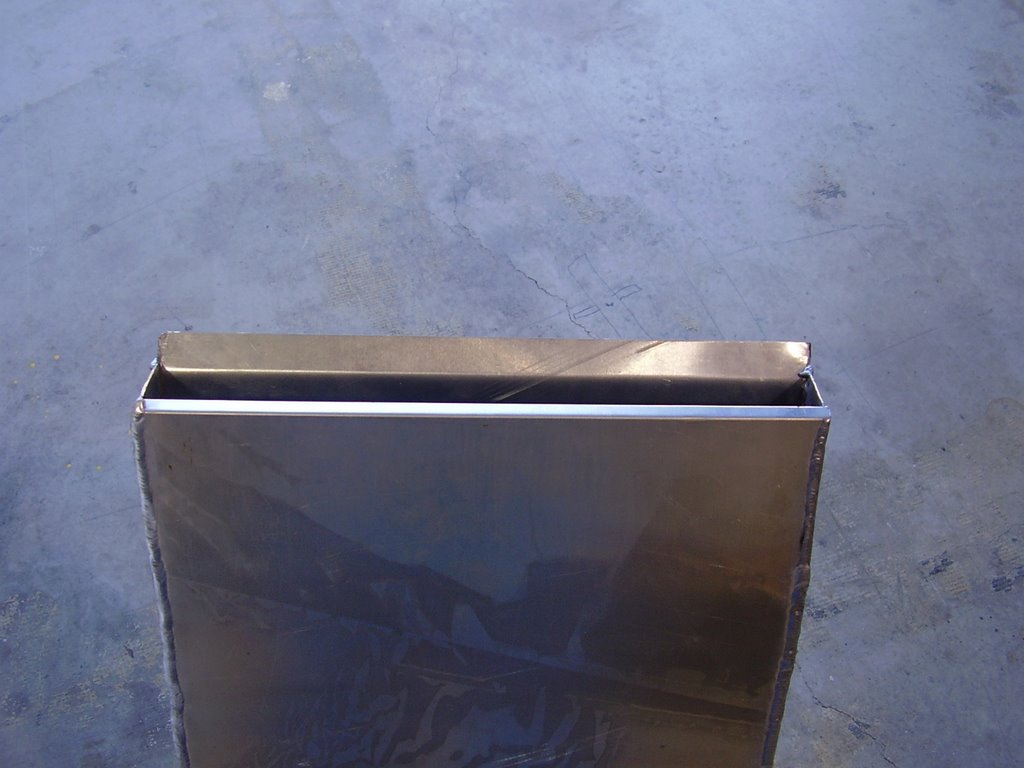
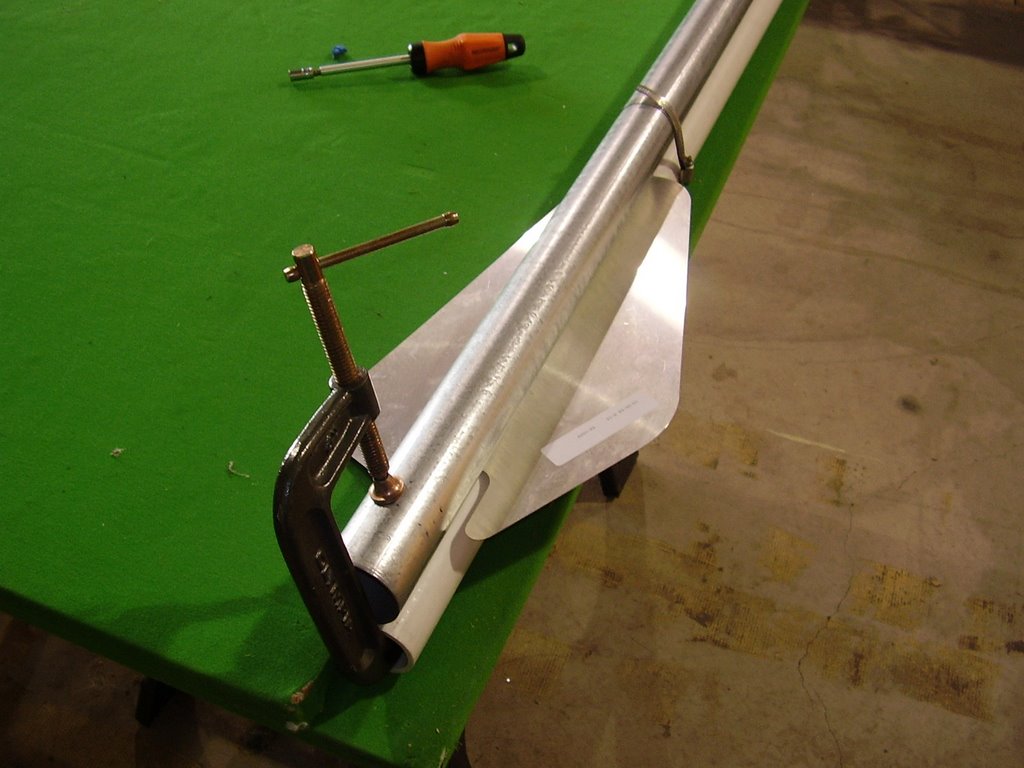
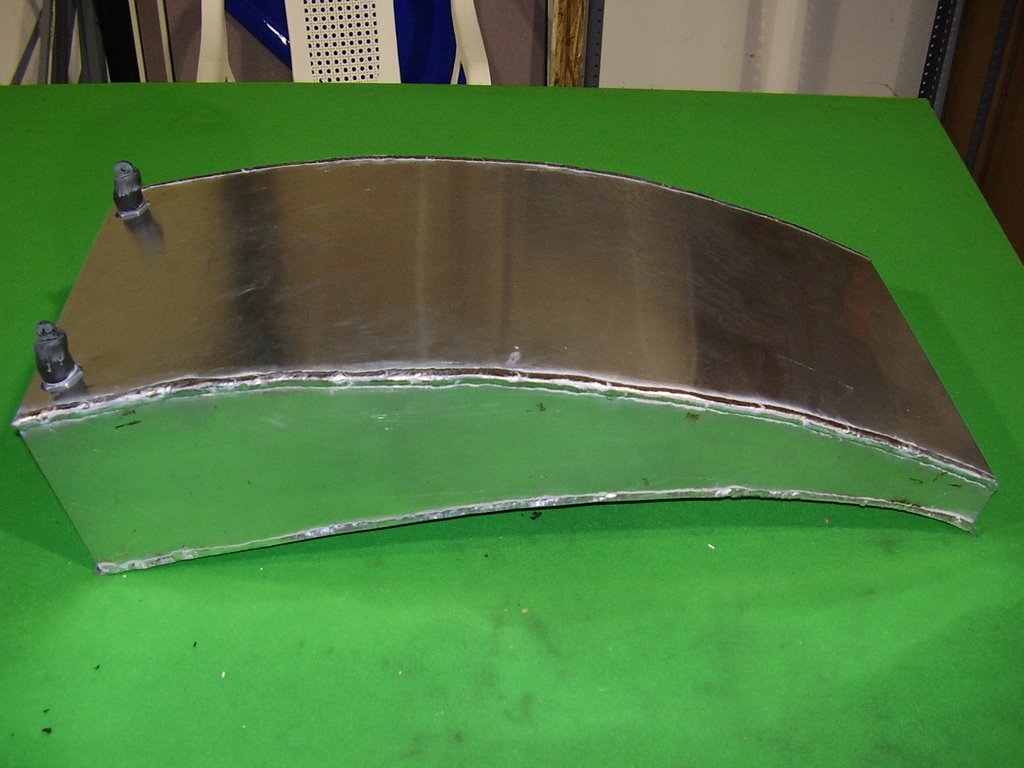
Today I started bending the sheet metal for the enclosure. I started off by bending the toughest pan first. This pan requires a complex bend since the rear is bent around a 3" diameter object while the front two curves are bent around a 2" diameter objects. In any case this wasn't easy and took many attempts.

The second piece wasn't much easier but I found that using Rans' suggest 5" bend wasn't accurate. I had pretty good luck measuring the distance between the edge of the pans and where the curves needed to start and marking them on the unbent sheet metal. I then measured the distance around the curve needed and marked that on the sheet metal as well. I did this for both the front and back edges of the rest of the pans and then bent accordingly.

Below are a few pictures of the process.


More Prep for Enclosure - 2 hours (342 Total)

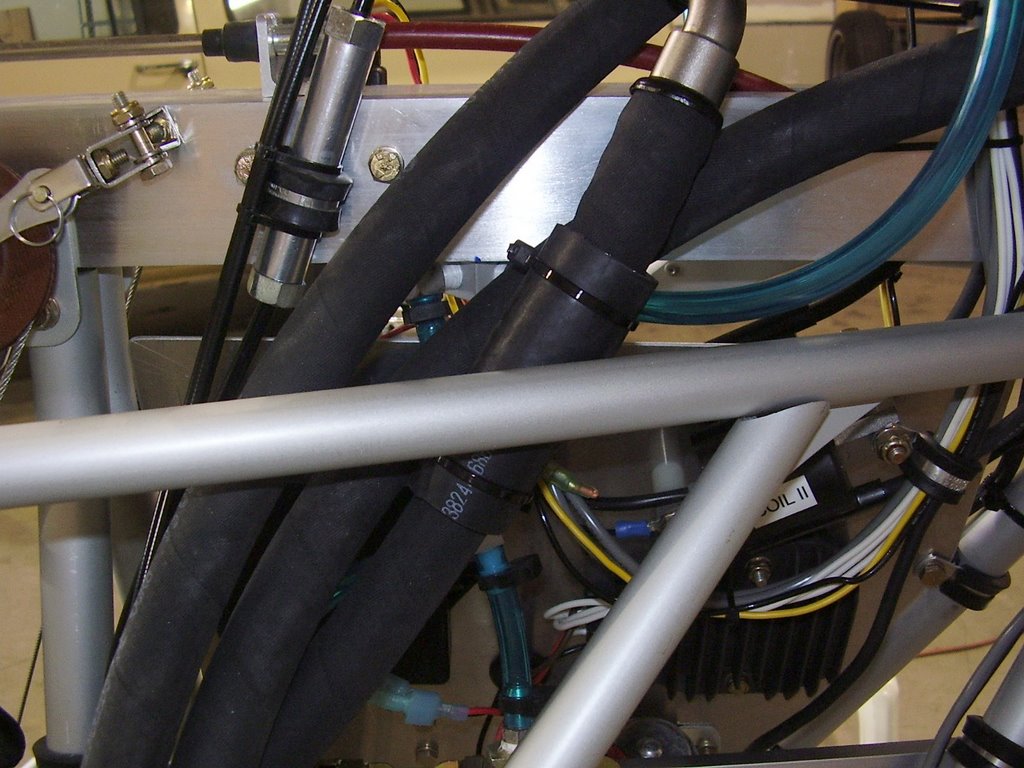
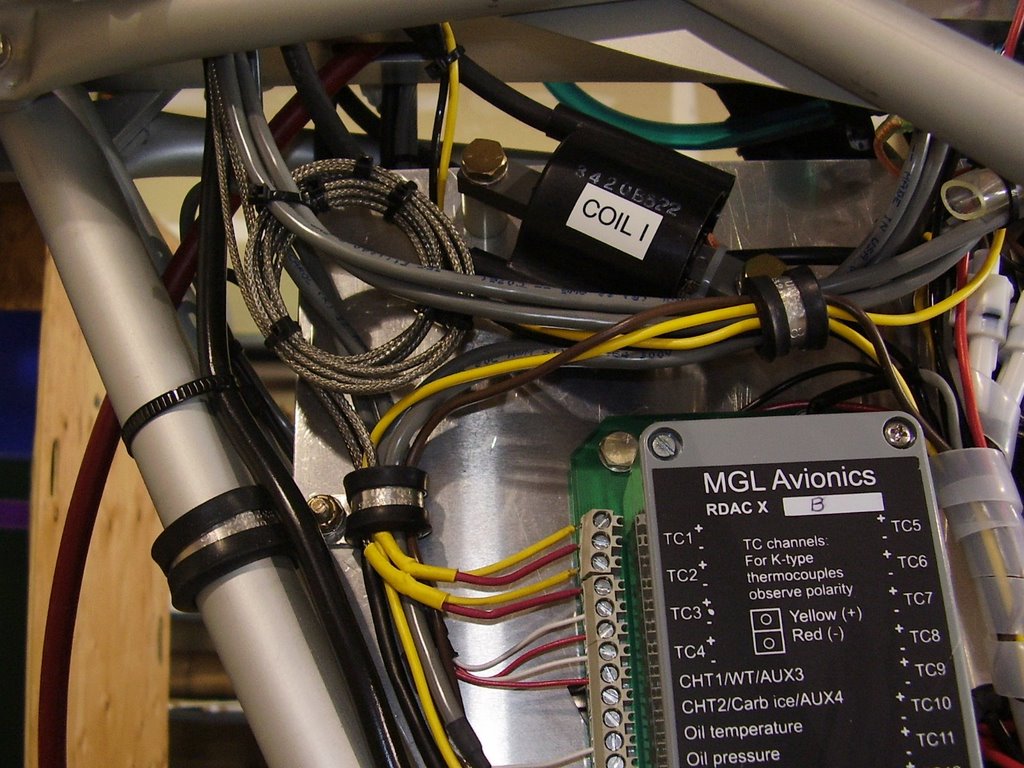
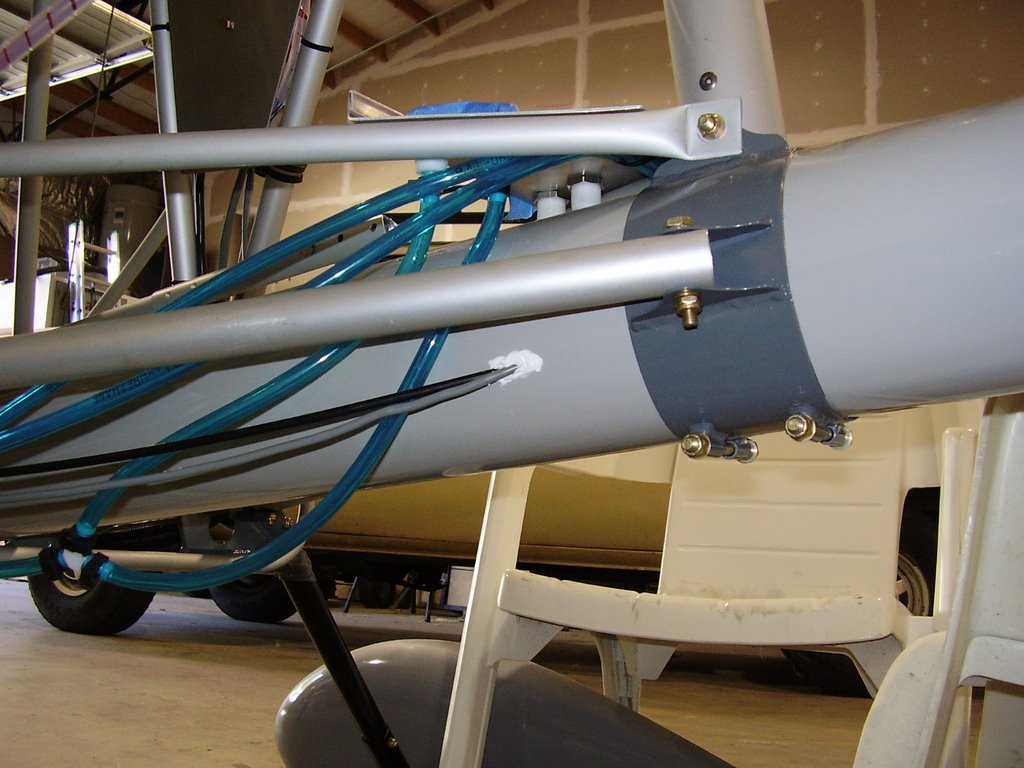
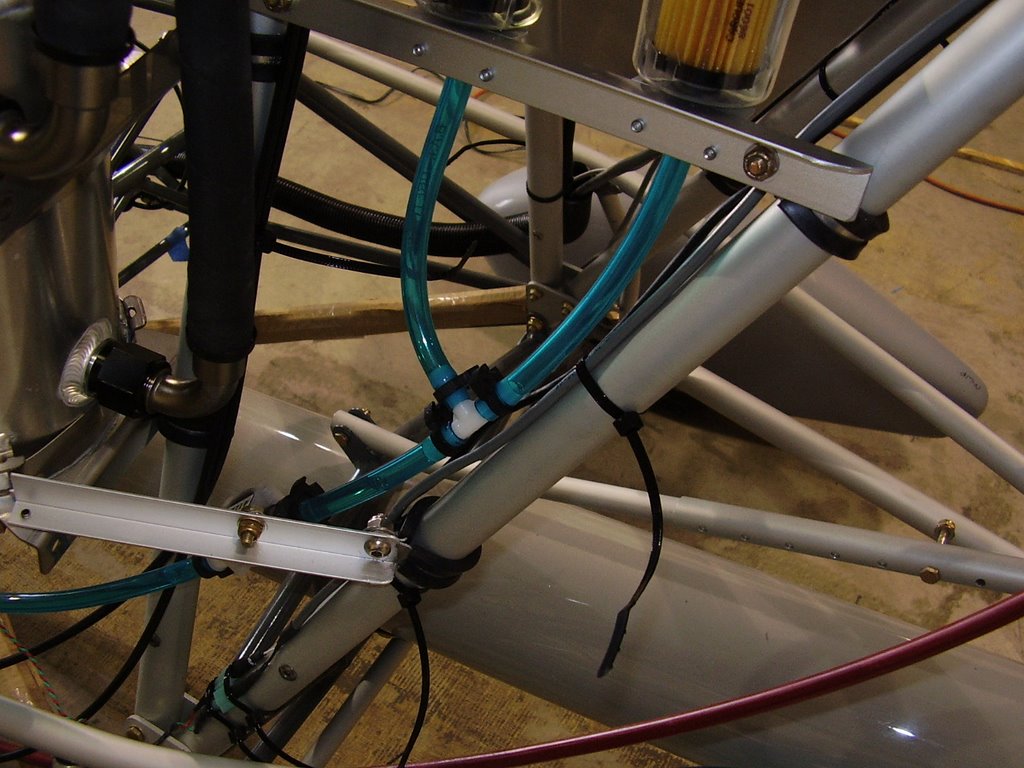
Before I start placing the sheet metal panels on the plane, I took some time to secure any wiring and plumbing that could be damaged due to vibration. In many cases this just meant tightening and trimming the zip ties that were already in place.


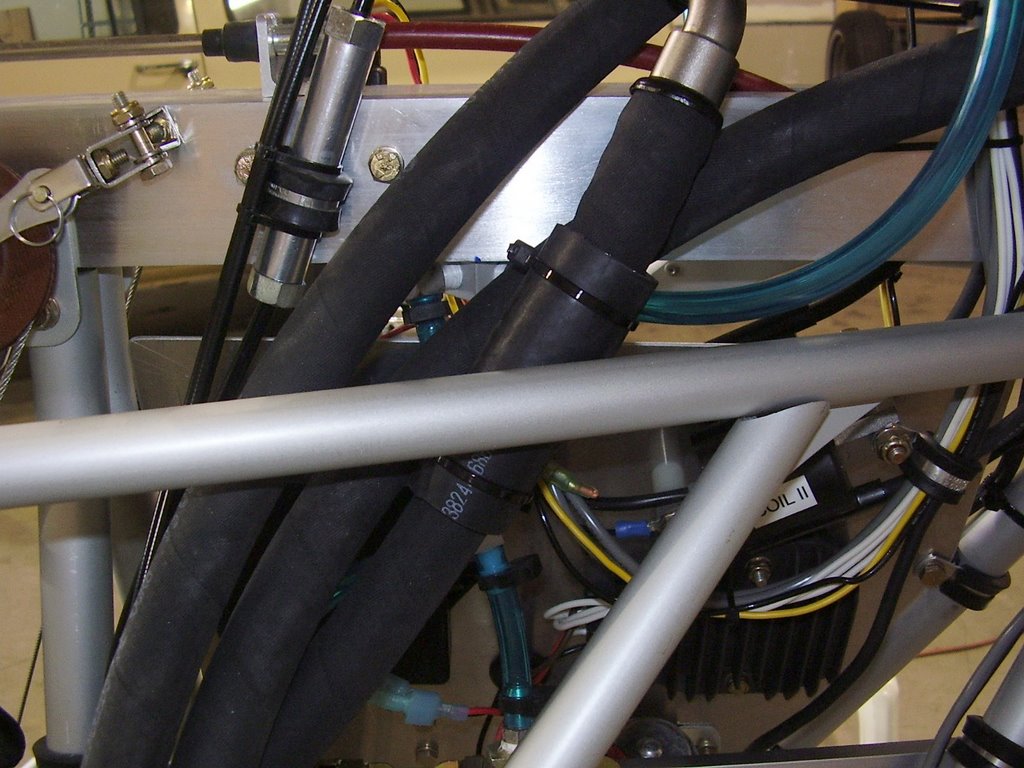
In the photo above you can see the piece of rubber hose wrapped around the oil line. I added zip ties to hold this piece in place.


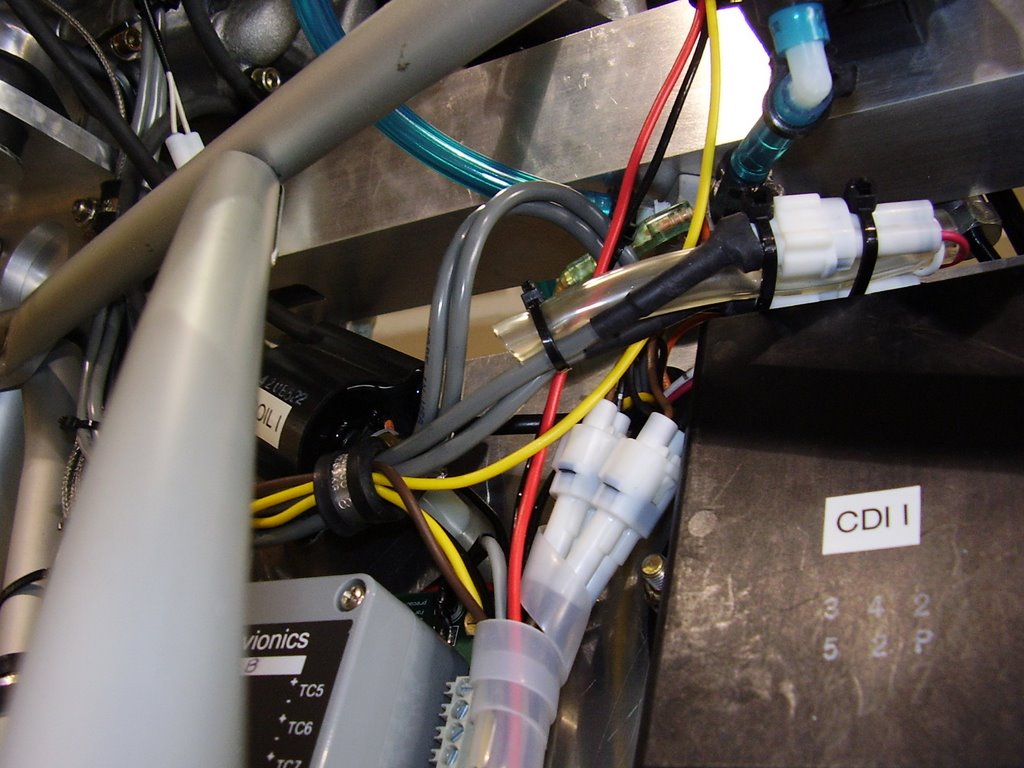
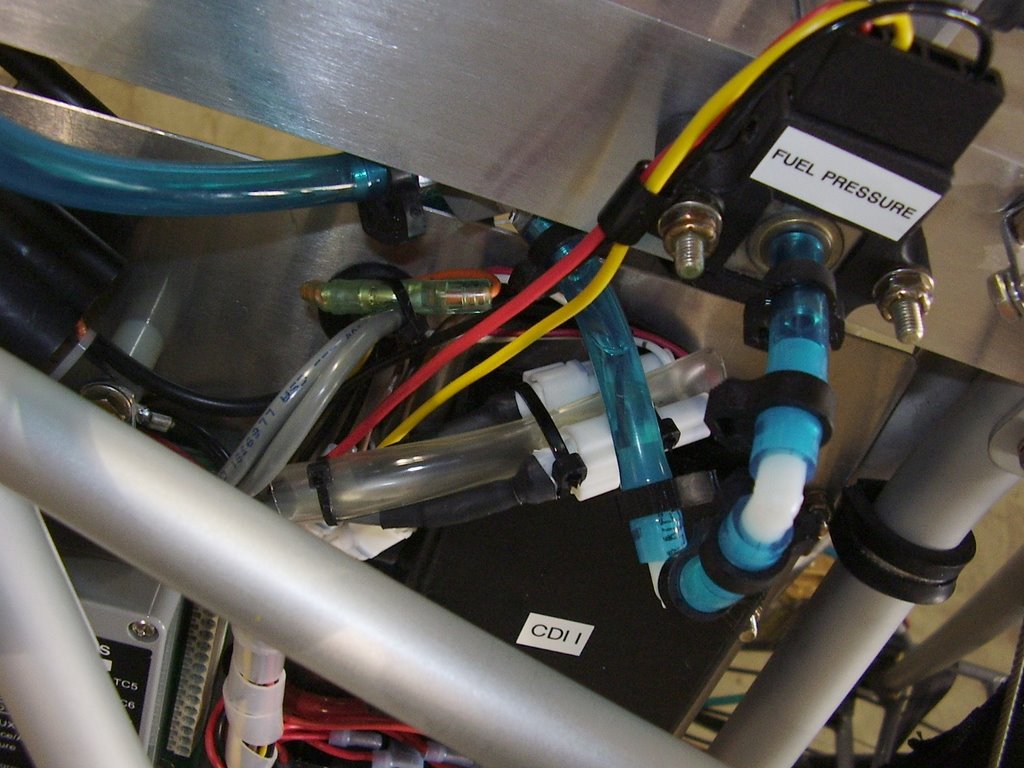
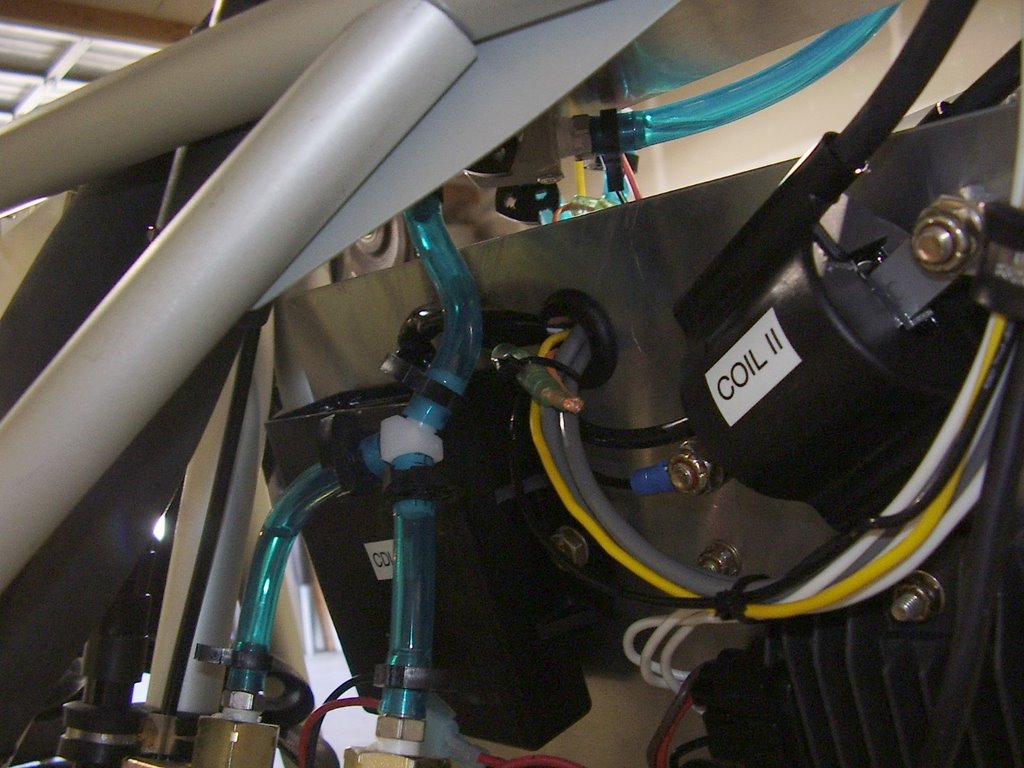
In the upper right corner of the photo above, you can see the reinforcement I added to the CDI connectors. These connect the CDIs to the engine. I zip-tied the wires and connectors around a piece of plastic tubing. The plastic tubing is flexible enough to allow for the wire and connecters to be be snuggly secured but rigid enough to prevent vibration damage.


The photo above shows another angle of the CDI connector fix.


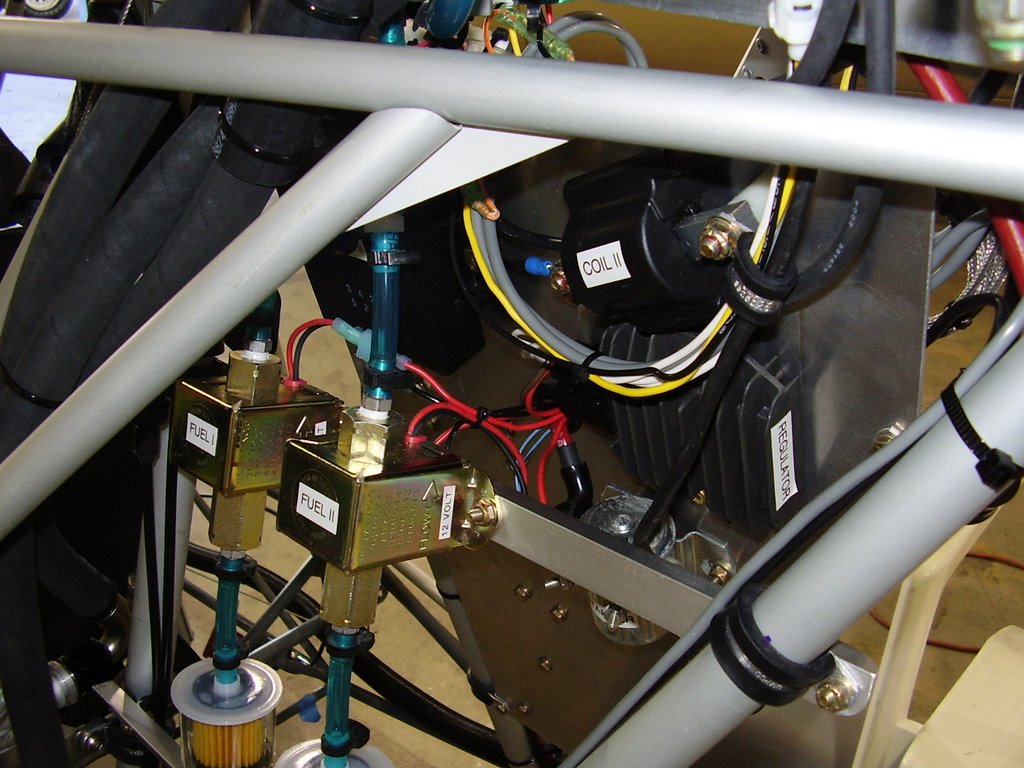
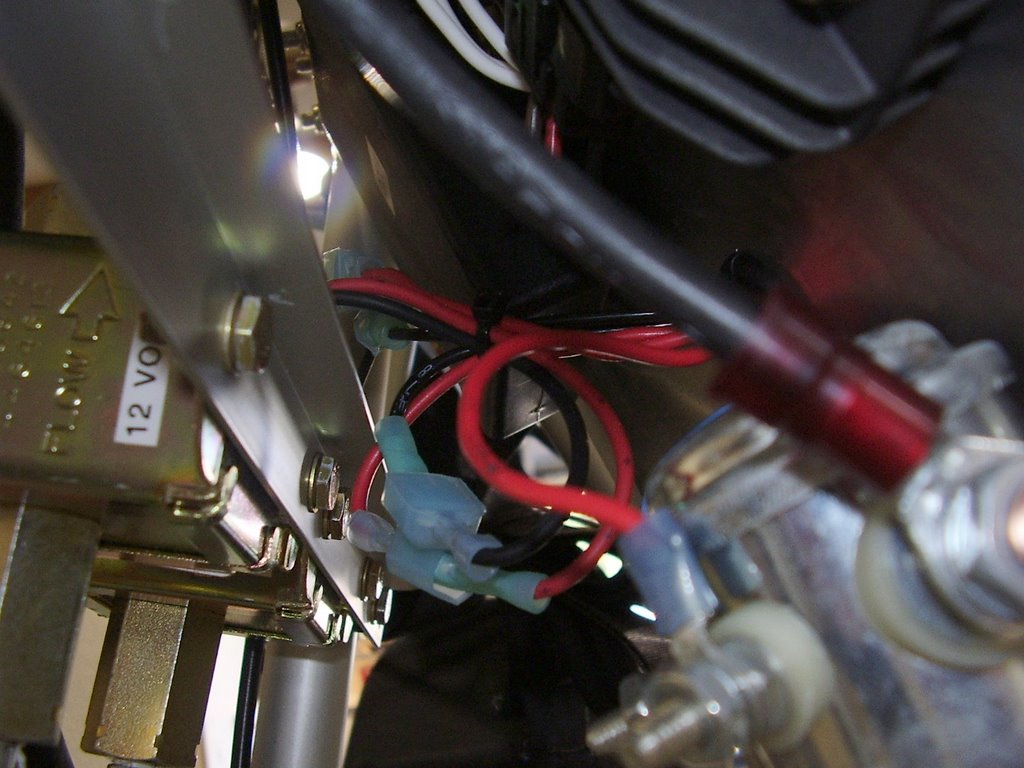
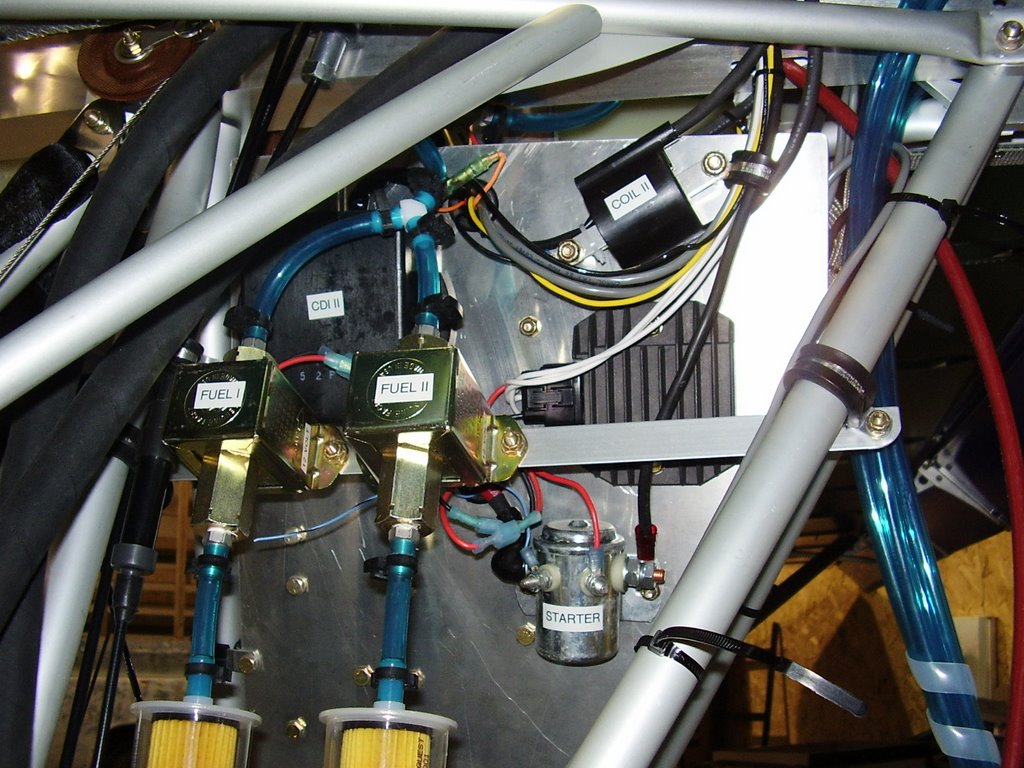
The photo above is a close up shot of the secured wiring for the fuel pumps.


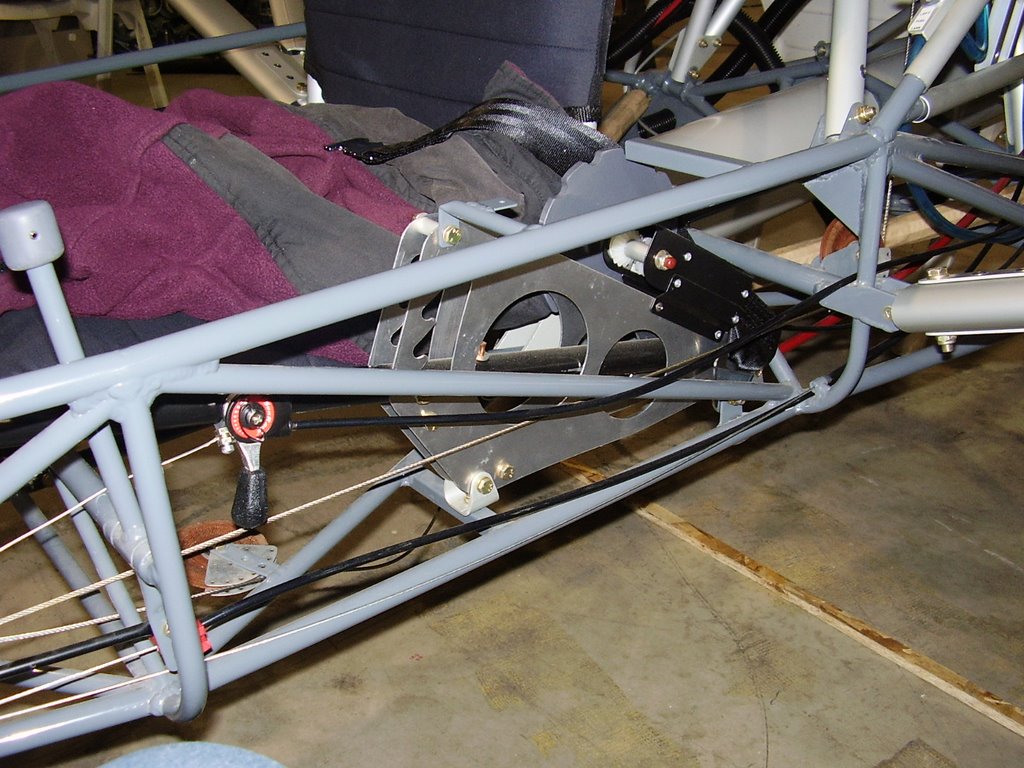
In the photo above you can see some silicone that I put around the trim cable and strobe wire.


The fuel line down stream from the fuel flow meter was rubbing on one of the cabaines. The photo above shows the results of shortening some of the fuel lines to alleviate the chance of rubbing.

Friday, September 08, 2006

Prep for Enclosure - 1 hour (340 Total)

With the engine systems proven, I can now move forward with installing the enclosure. To make putting on the sheetmetal on the plane easier, I need to remove the wings. Prior to doing that I need to remove the cowl and oil cooler. I purchased some caps and plugs to place on the oil cooler and oil lines to keep them from spilling oil or becoming dirty. You can see the caps and plugs installed on the two pictures below.


When I disconnected the oil fittings from the oil cooler I expected a small amount of oil to spill. To help minimize this, I tipped the plane on to its tail to allow more oil to drain from the cooler to the tank. I then righted the plane and removed the fittings. Not a drop of oil spilled. The oil level was about 4 rows down from the top of the cooler. My setting the plane on it's tail shouldn't have drained this much oil. I guess the oil may have siphoned itself out of the cooler when it was flowing into the tank.

One of the oil fitting that connects to the thermostat does not have much clearance to the wing root To try and increase this clearance, I loosened and rotated the fitting. In the center of the photo below you can see the fitting that I rotated.


While the engine was cold, I torqued the spark plugs to 18 ft-lbs and the exhaust nuts to 20 ft-lbs. The spark plugs moved slightly because when I installed them, I only torqued them to 17 ft-lbs. The exhaust nuts were snug and didn't budge.

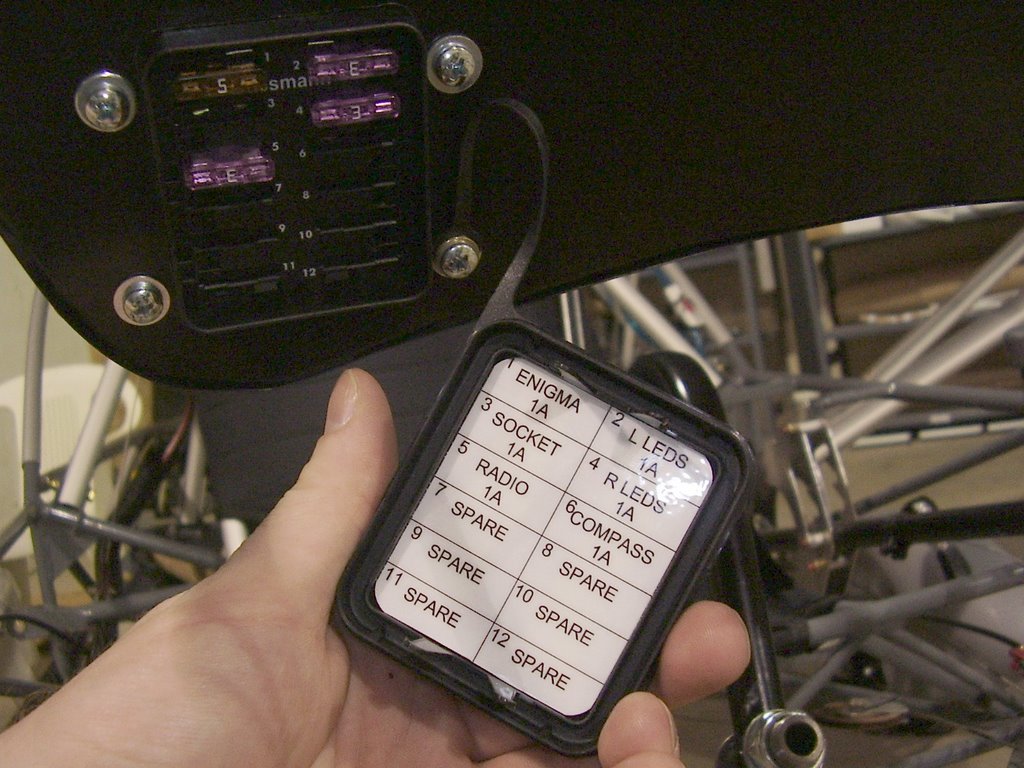
In the process of testing my headset wiring for my radio, I blew the 1 amp fuse in the insturment pod. I will need to up the amperage of this and the other fuses.

Thursday, September 07, 2006

Balancing Carbs - 3 hours (339 Total)

Today I tinkered with my first set of carburetors... I wish this engine was fuel injected!

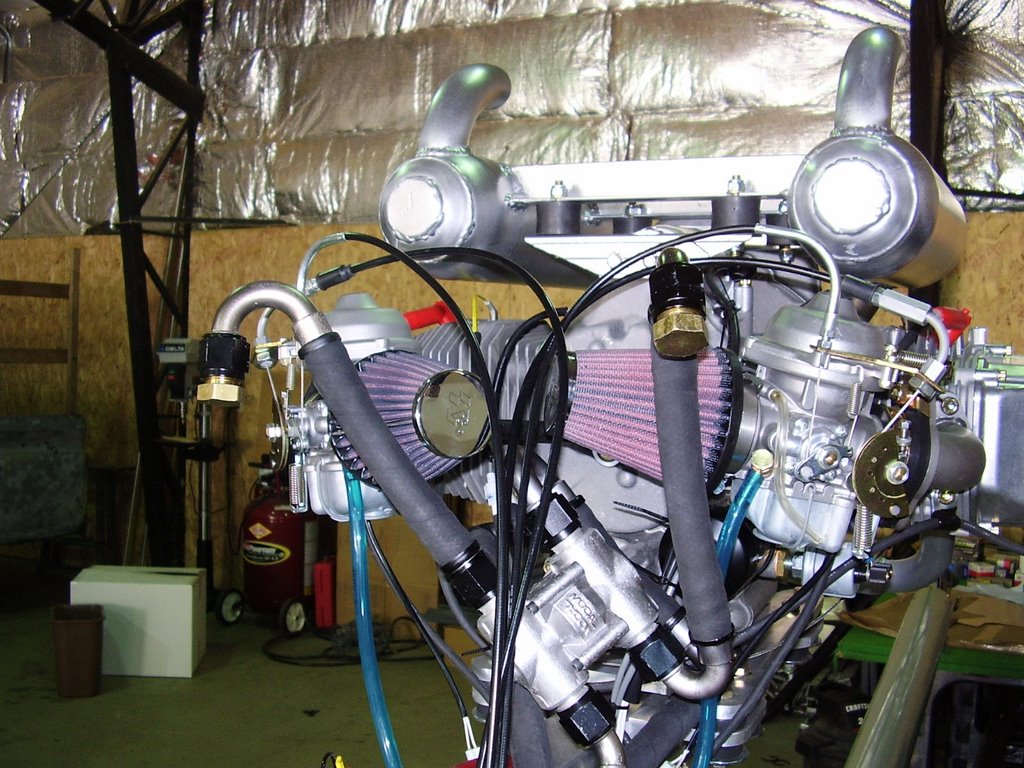
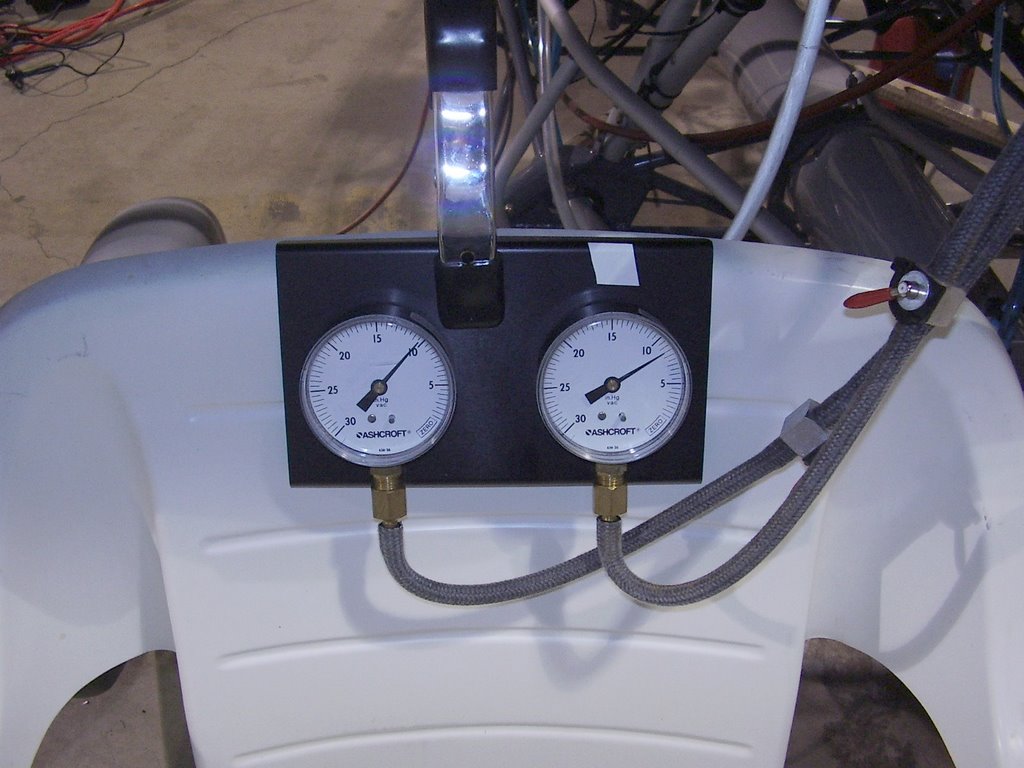
I borrowed a set of vacuum gauges from a friend and connected them in place of my balance hose. In the picture below you can see what the initial vacuum levels were before I touched anything.

I went through four cycles of playing with the idle stop screws and having to shut the engine down to cool off. I wasn't bold enough to attempt adjusting the idle mixture screws. After the fact, I think my idle mixture screws do need to be adjusted. When I adjusted the idle stop screws so the vacuum pressures matched, one of my EGT would be significantly higher than the other. I ended up adjusting the idle stops so that the EGTs were very close to each other but the vacuum readings were off by about 2".

HPower recommends setting the idle, without prop, to 1450. I unintentional, set my idle to about 1600. It is running pretty smooth at this speed and isn't causing a sever vibration on my electrical panel.

I will spend some more time balancing my carbs once I get it out to the hanger. I need to focus on finishing the plane.

Monday, September 04, 2006

Modified Engine Wiring- 3 hours (336 Total)

Today I did some rewiring of the electrical system to fix some of the problems seen yesterday.

The first thing I did was trouble shoot my rev counter. I used an oscilloscope to look at the rev counter signal. I am using the trigger wire that connects the coil to the CDI. The signal I saw was a negative pulse in the range of 200v. The inactive portion of the waveform seemed to be clean and appeared to be at zero volts. I assumed that the RDAC wasn't able to see this negative pulse so I mocked up a setup that connected it to one of the AC lines of the alternator. This gave me a signal the RDAC could read. Looking at the wave form again surprised me. I was expecting a sinusoidal wave; instead, I saw a very square pulse up to 12V. I then, permanently, rewired the rev counter input to the AC wire of the regulator.

Since I had my oscilloscope handy, I used my current probe to see what was going on with my starter solenoid. I could see 40amp and sometimes 80 amp spikes on the starter solenoid. My installation has two fuses between the starter solenoid and the battery. The Master fuse which is 20 amps and a 3 amp fuse to power the RDAC, Fuel Pressure sender, and the starter solenoid. The schematic from Hpower does not have this second fuse. My solution was to rewire the system to be more like the Hpower setup; I connected the solenoid directly to the Master circuit.

Downstream from the solenoid is the starter switch; but between the two is approximately 12 feet of 22AWG wire. The wire will easily deal with the DC load of the solenoid but I don't know if it would have any issues with the 80 amp spikes. I decided to err on caution and use the one spare 22AWG wire to share the load.

Sunday, September 03, 2006

Started Engine for the First Time - 5.5 hours (333 Total)

Well today was the day I had been waiting for for quite a while now. I spent a large amount of time securing and verifying components. This included adjusting throttle cables, choke cables, fuel lines, air filters, adding oil, and other engine related items.

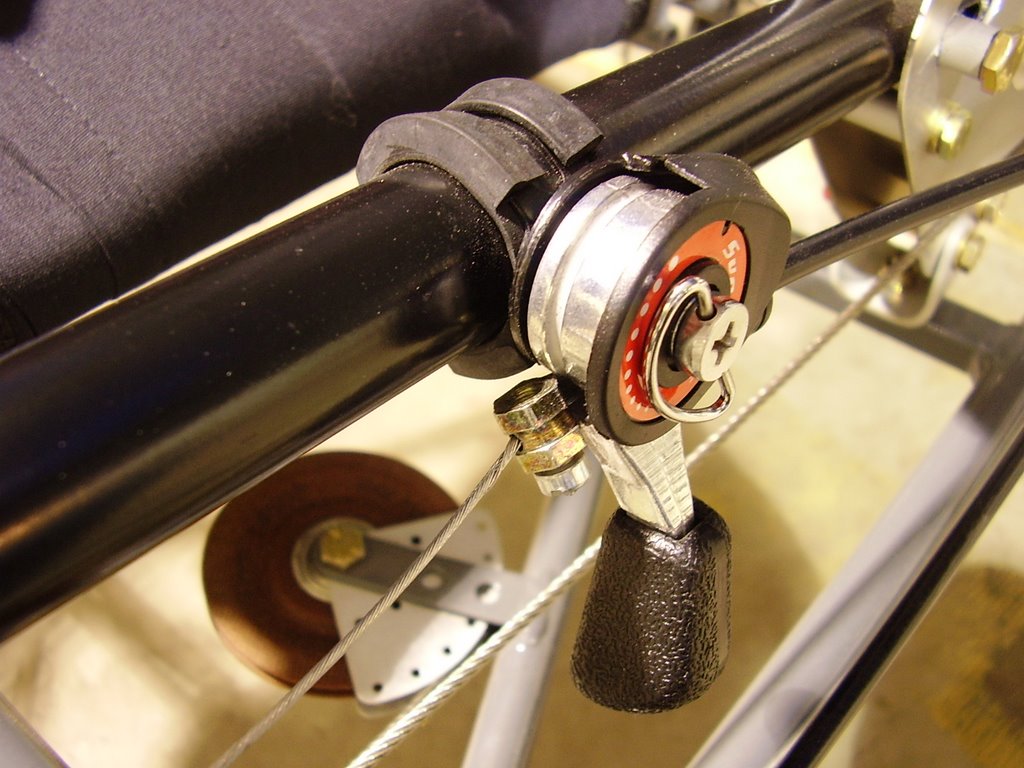
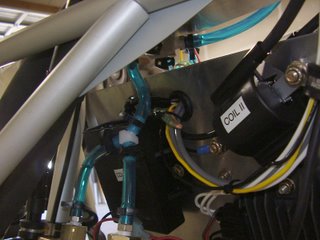
I spent a fair amount of time securing the cable 'Y' for my choke. I tried securing it with the same bolts that hold the fuel pumps in place. There wasn't enough space to allow for this so I ended up using a new pipe clamp to create a mounting point for the 'Y'. In the picture below you can see the two pipe clamps in the lower left corner.


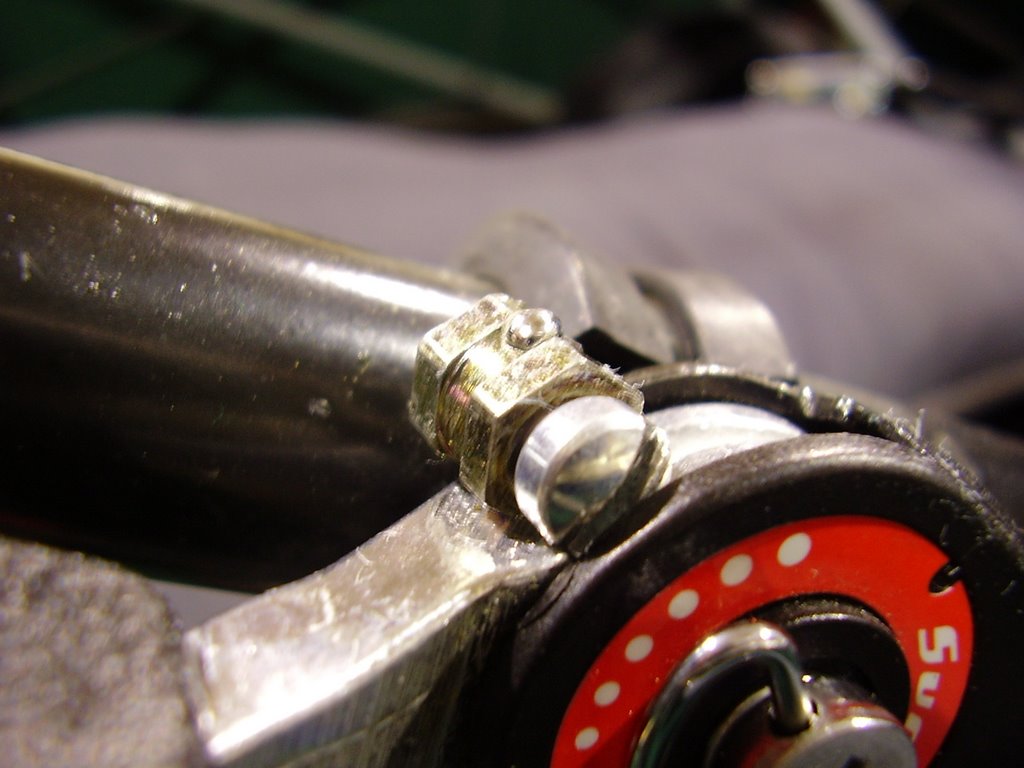
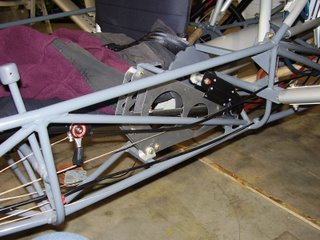
In the process of securing the choke cable, I rerouted its cable and placed a rubber cushion around the choke lever attachment bracket. I rerouted the cable to keep it from rubbing and interfering with one of the aileron pulleys. The rubber cushion was required to keep the lever from rotation around the flap handle.
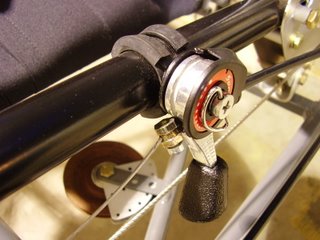


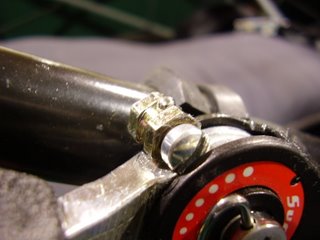
I also trimmed the cable and applied some solder to keep it from fraying.


Prior to starting the engine, I needed to prime the oil lines. This required cranking the engine, with the CDIs off and spark plugs removed, until a pressure is indicated by the oil pressure sender. The engine manual does not specify what this pressure should be. I turned the engine over for several seconds before I got nervous and let go of the starter switch. Unfortunately, nothing happened when I hit the starter button a second time. I had blown the three amp fuse that powers the starter solenoid, RDAC, and fuel pressure sender. I replaced the fuse with a larger 5 amp fuse. This worked for a while but also blew. I replaced this with a 10 amp fuse but will need to find a better solution.

Back to the oil priming... Even though I could crank the motor, I still wasn't getting any oil pressure. I ended up fixing this by plugging the air vent on the oil tank. This allowed air pressure to build in the tank and help force oil into the engine. I saw about 6 psi of oil pressure once the system was primed.

Once I started my engine I noticed a few other problems. The first was engine vibration. The engine wasn't running rough but at idle the top of my electrical panel was vibrating more than I wanted it to. At slightly higher RPMs, the vibration reduced significantly. Hopefully, balancing the carbs will alleviate this.

The second problem was the lack of a RPM signal. My tachometer wasn't getting any kind of signal. I played with the jumper settings on the RDAC with no result.

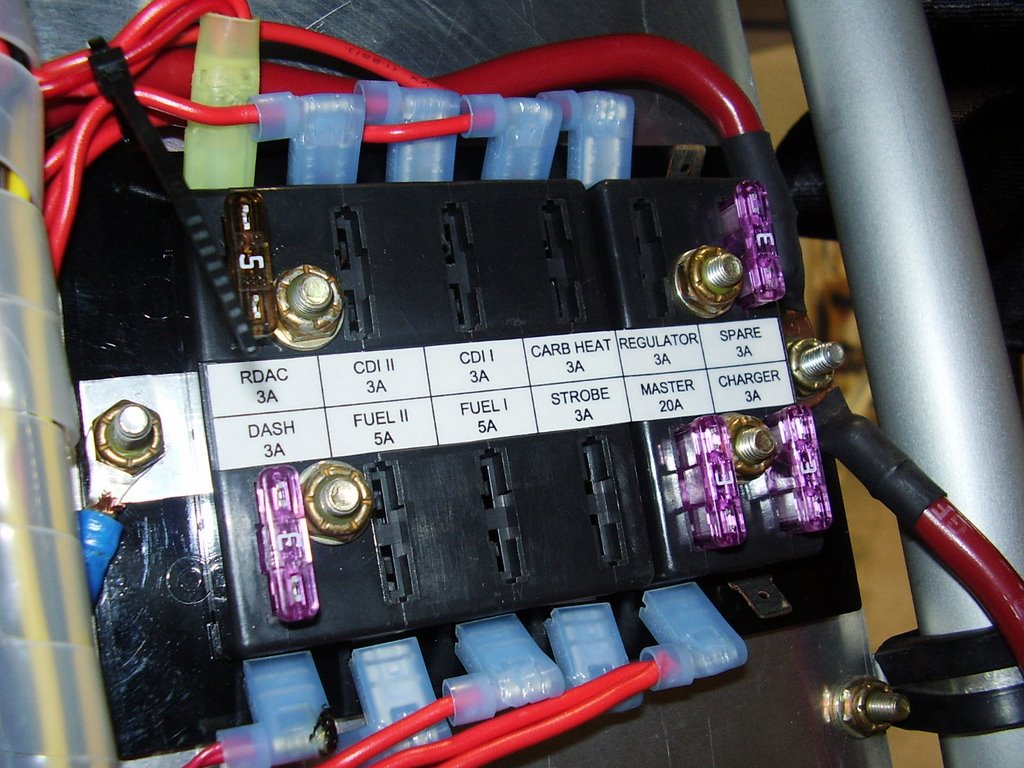
The third problem was also fuse related. The 3 amp fuse to my regulator was too small and as expected, was blowing. This was causing me to run off my battery and more importantly, not recharging it between starts. The fuse should have been rated at 20 amps. This was caused by a typo in the schematics and label I created.

Other than the problems listed above, the engine ran great.
Saturday, September 02, 2006

Cowling - 3 hours (327.5 Total)

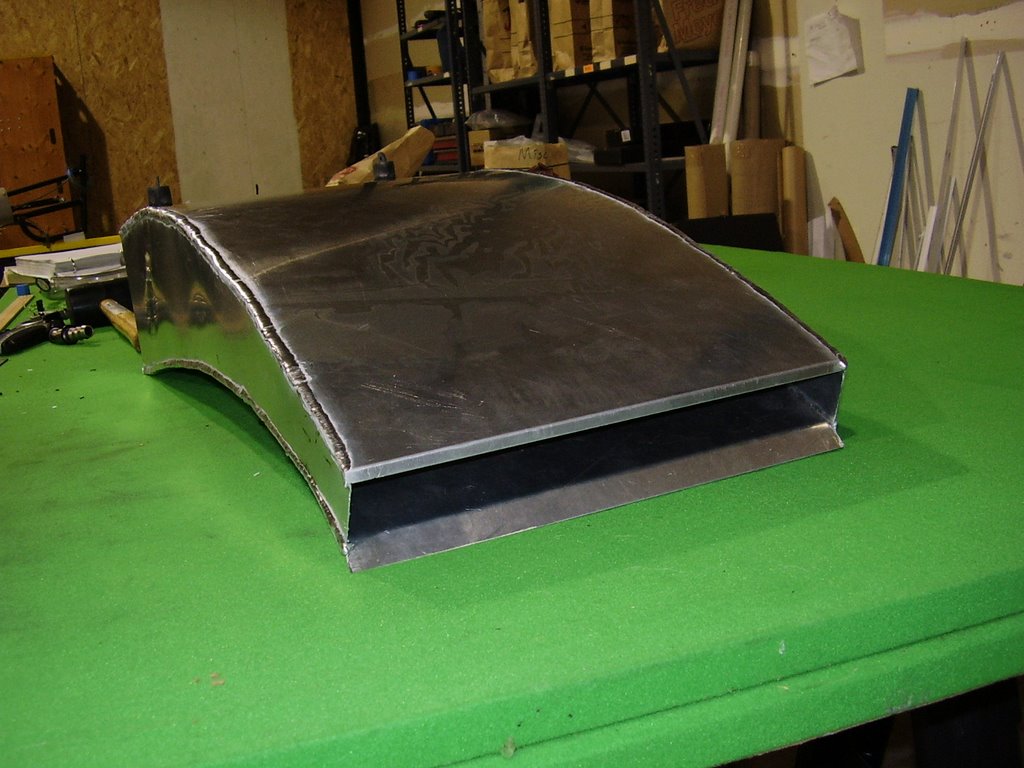
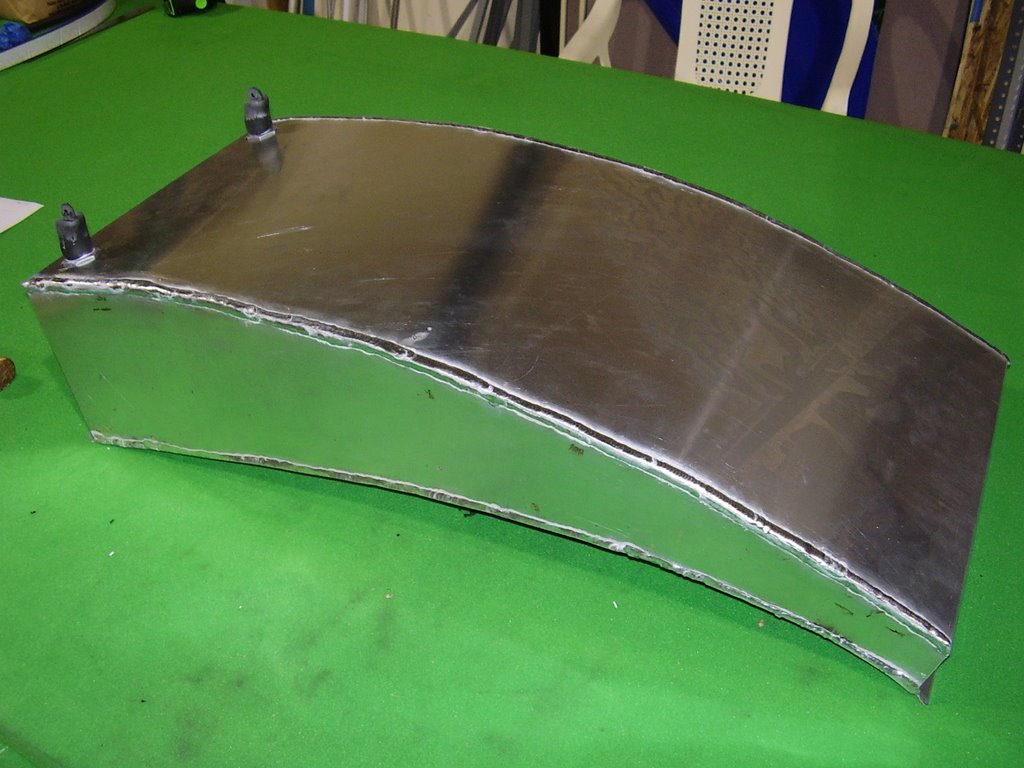
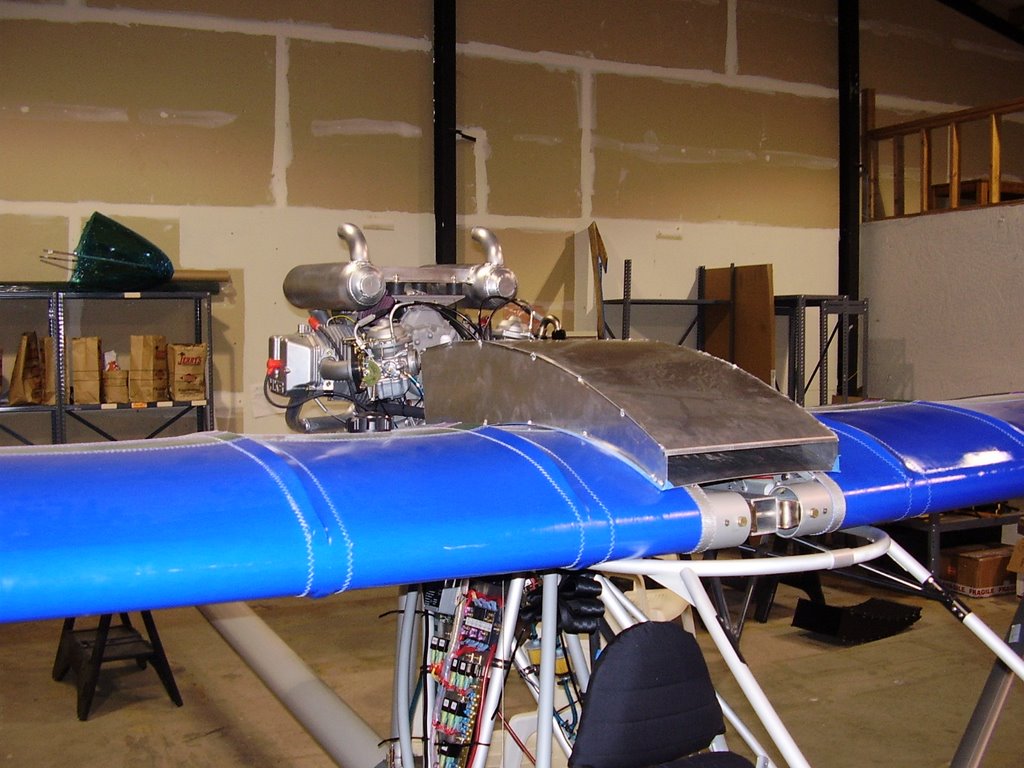
Today I receive my finished cowling and am happy with the results. I was initially disappointed in the looks of the cowl when I had seen the first welded seam. In my last post I discussed several theories on what I thought had occurred since I wasn't there to witness the welding. I was able to watch and help out with the welding of the three other seams. It turns out the problem with the welding was easily resolved by using clamps more often. By clamping the material together an inch to two inches away from the weld, we were able to keep the material from moving or warping. This required a lot of clamp moving but wasn't difficult. My extra set of hands moving the clamp allowed the welder to concentrate on the welding.

Once all four seams of the cowl were welded, we ground off the high points and ran a second and sometimes third bead. This cleaned up the welds nicely.

I still need to secure the oil cooler inside the cowl and cover the large holes on either side.


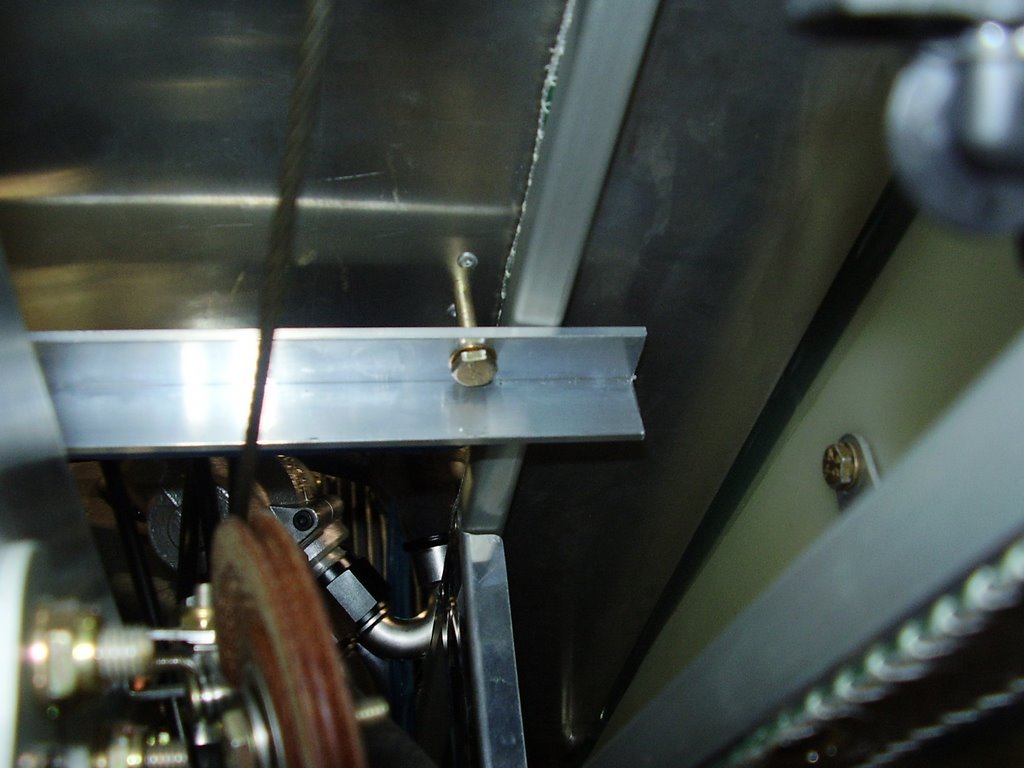
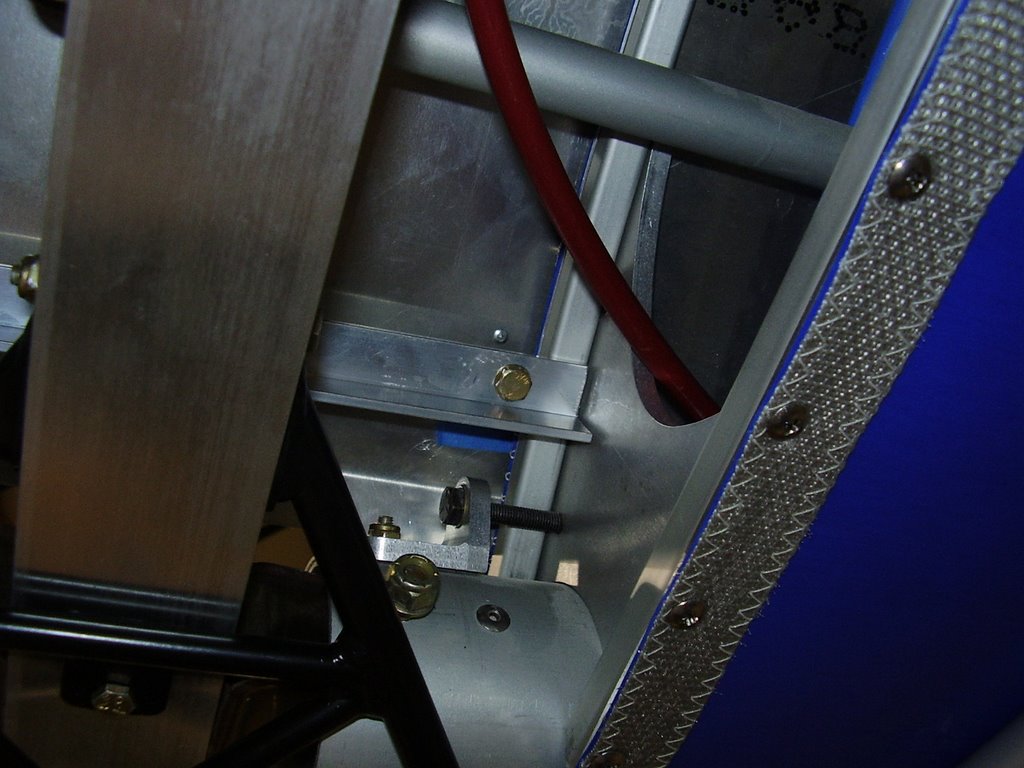
To mount the cowl I installed eight nut plates to the bottom surface of the cowl. I then cut four pieces of angle aluminum. In the pictures below you can see how the four pieces of angle aluminum clamp the cowl to the top edge of the root ribs of the wings. I have a piece of 1/4" dense foam under the cowl to absorb vibration and protect the wing fabric.


The corners of the cowl near the opening are sharp. I will need to round these over to prevent them from coming in contact with the wing fabric and damaging it. I placed blue paper towels under the corners in the mean time. You can also see the nut plate in the picture below.


Wednesday, August 30, 2006

Thermostat - 3 hours (324.5 Total)

Today I plumbed my oil cooler, thermostat, and oil lines. Unfortunately, I don't have any pictures of the finished setup and at the time of writing this, I have already taking the cowl and wings off the plane. I have a couple of pictures in my September 9th post that show the plumbing with the cowl and wings removed.

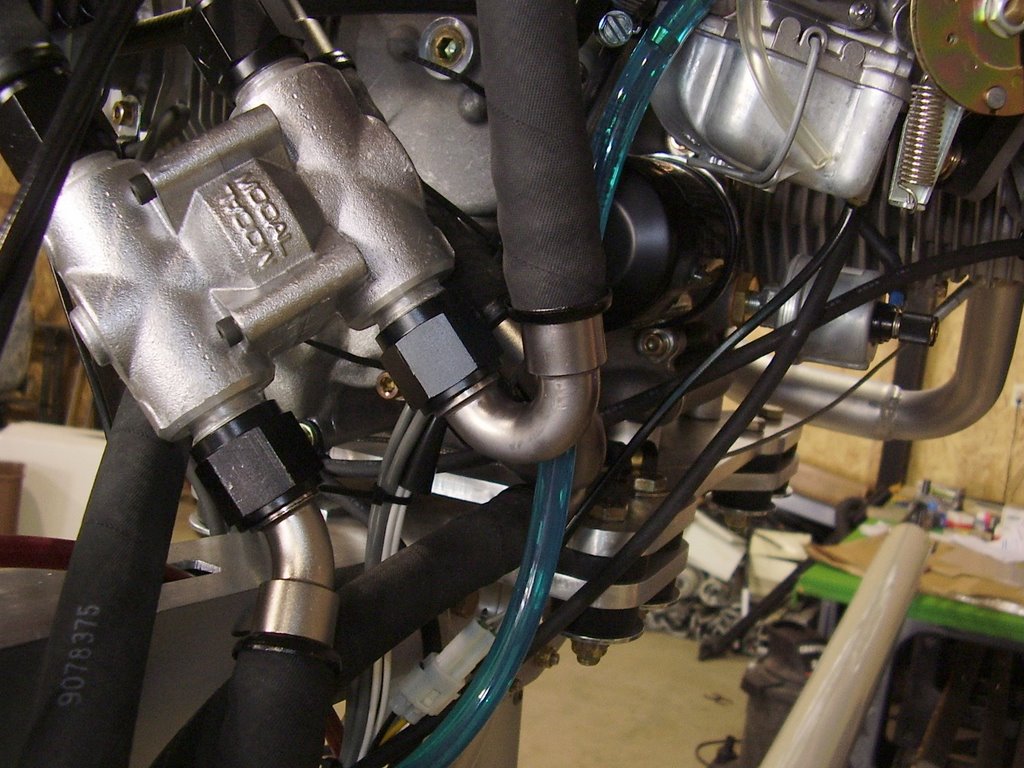
I did not have a lot of room to place the oil thermostat between the cooler and the engine. I needed to orientate the thermostat at an odd angle to allow the oil fittings to clear all of the engine components. For the hose that connects the thermostat to the engine, I needed to use two 180 degree fittings.

The tight space required the use of short hoses which actually helped in mounting the thermostat. These short hoses give enough structure to the thermostat that it doesn't need to be physically mounted.
Before cutting my expensive oil lines to length, I used a cheap hose to mock up the plumbing. This worked great but I ran into one issue when I started replacing the cheap hose with the Aeroquip hose. When the Aeroquip hose is pushed onto the fittings, the hose looses 1/2" of length. This usually isn't an issue with a longer hose but caused me some problems on my 6" hose. Luckily, I was able to use that hose in a different location since I didn't have any to spare. I had only ordered 8' of the hose and ended up using all but two inches of it!

I was forced to route one of the oil lines in a way that could cause it to chafe against the structure. I ended up placing a rubber hose around the oil line to protect it. This isn't the most elegant fix but it is a common way of dealing with these issues. You can see a picture of this in my September 9th post.
Sunday, August 20, 2006

Cowling - 0 hours (321.5 Total)

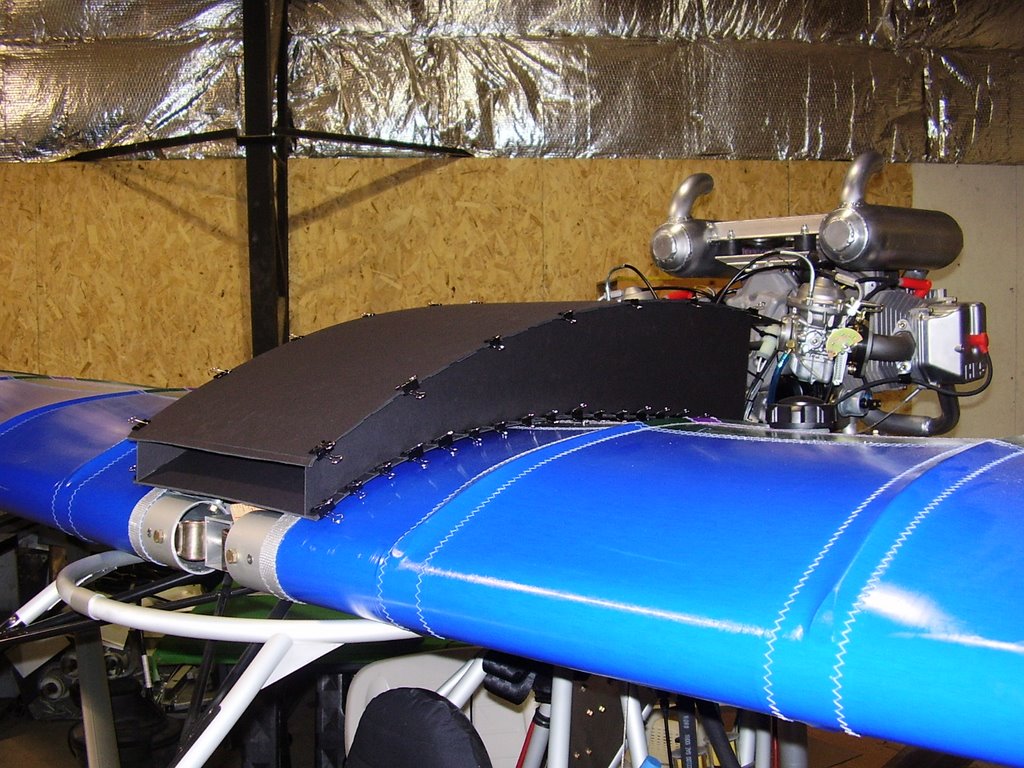
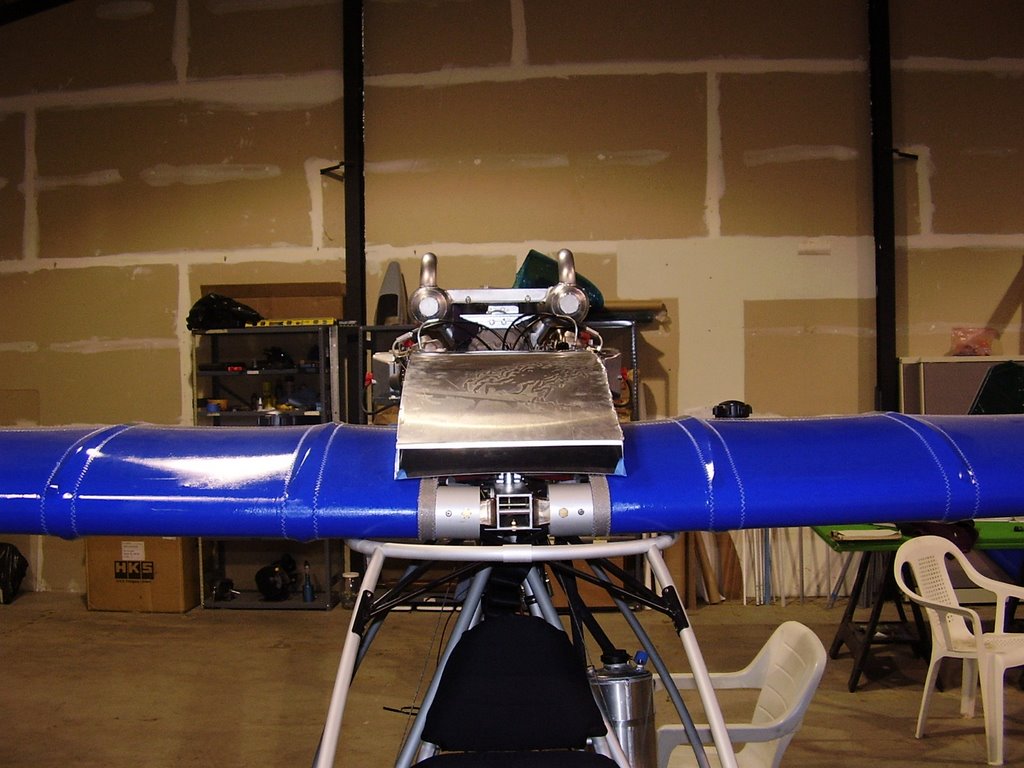
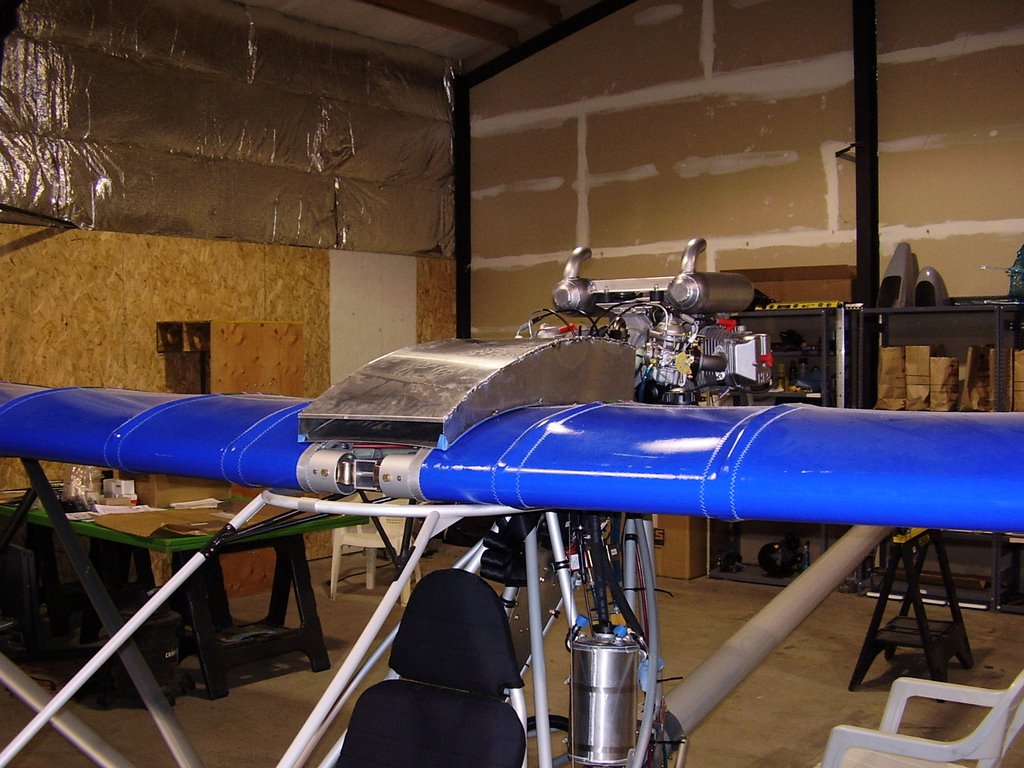
Below are some pictures of my cowling. The cowling is not completed yet, it still needs some more welding done to it. Only one seam is complete; the others are only tack welded.

There have been a few design changes since my last posting for the cowling. Instead of riveting the cowling together, I am having it welded together. Another design change was the lack of hems on the leading and trailing edges. The 6061-T6 material is too brittle to allow for the 180 degree bends. Instead I had 90 degree bends placed on the trailing edges and a 60 degree bend placed on the top leading edge. The bottom leading edge was left straight.

The opportunity to have the cowl welded kind of fell into my lap. The welder is a friend of a friend who has a TIG welder in his garage. He was willing to weld the pieces together for relatively cheap. It was thought that welding would be easier and quicker than cutting, bending, and riveting all of the tabs. Unfortunately, the welding is not going as smoothly as we (me and the welder) had hoped.

We tried tack welding the pieces together without creating a complete jig. The pieces held their shape while they were cold and held together with tape but when heated during the welding processes, they would distort. Clamping the pieces didn't help either since it only provided a local force. The metal would become soft during the welding and would warp around the clamp.

The top and bottom pieces started to pull away from the side pieces when heated during the tack welding process. This caused a gap to form and a small distortion to form at the start and stop points of the tack welds on the top and bottom pieces. This distortion will probably not be an issue once the seam is completely welded since the edge of the material is consumed into the bead of the weld.

The various width gap between the pieces made the welding very difficult which made it impossible to created a "pretty" bead. You can see in the photos that the weld is very rough.

It appears that the pieces didn't expand the same amount under the heat of welding. You can see in the picture that the side piece became wavy. The curvature of the top piece probably allowed it to absorb the heat expansion all in the outward direction. Since the side pieces were tacked together, they were forced to bow both inwards and outwards. In hind sight, it would probably have been better not to tack the pieces together. One continuous bead would allow the metal to expand freely. This would allow the material to stay straight for the first weld on either of the sides but the second weld may see the same type of expansion problems.

Another theory is that the aluminum pieces don't expand uniformly. The aluminum could expand differently along the grain versus against the grain. The top piece has its grain running front to back, the sides run top to bottom.

Another problem is the bottom leading edge isn't holding the shape of the curved sides. You can see in the photos that the edge is curved upwards in the middle. The other seams are doing fine since they have bends which give them extra strength. I considered having top and bottom pieces rolled to give them their curve but decided against it since the bottom curve doesn't have a constant radius because of the airfoil shape. I will try to give the metal a slight bend or crease by hand to help it hold it's shape.


Friday, August 18, 2006

Rubbing Aileron Push/Pull Tubes - 1.5 hours (321.5 Total)

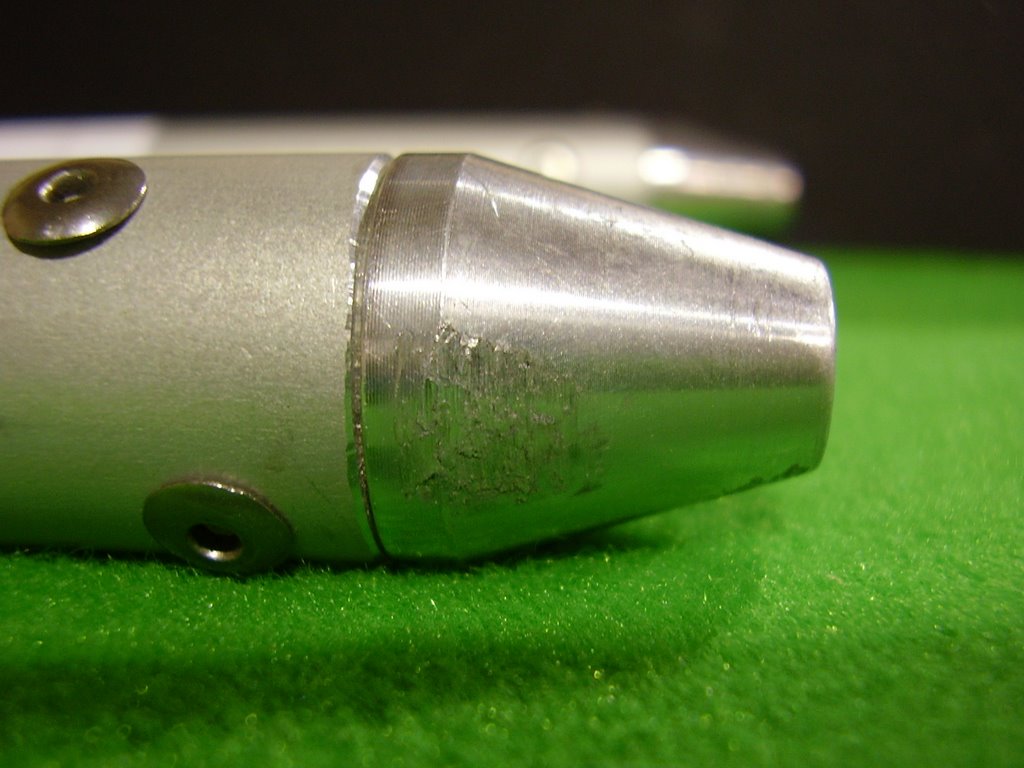
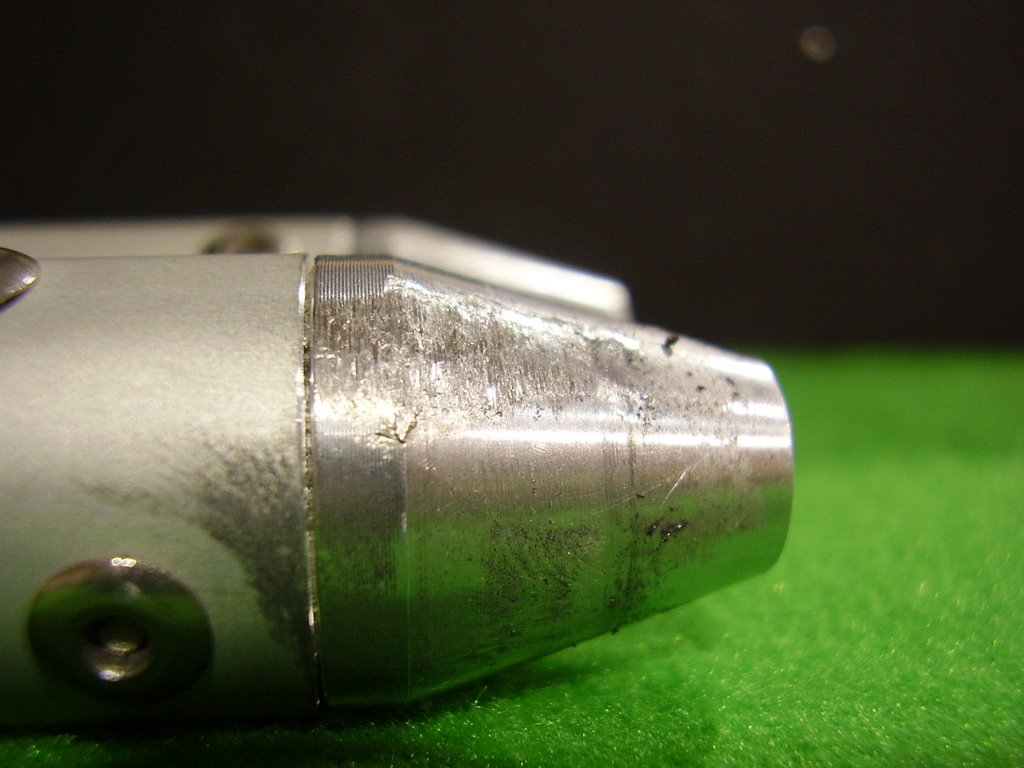
A while back I noticed that the Short Push/Pull Tubes for the ailerons were binding up on the Bell Cranks inside the wings when the ailerons were fully deflected. This binding was reducing the aileron range of motion from 45 degrees to 35 degrees, 5 degrees on each side.

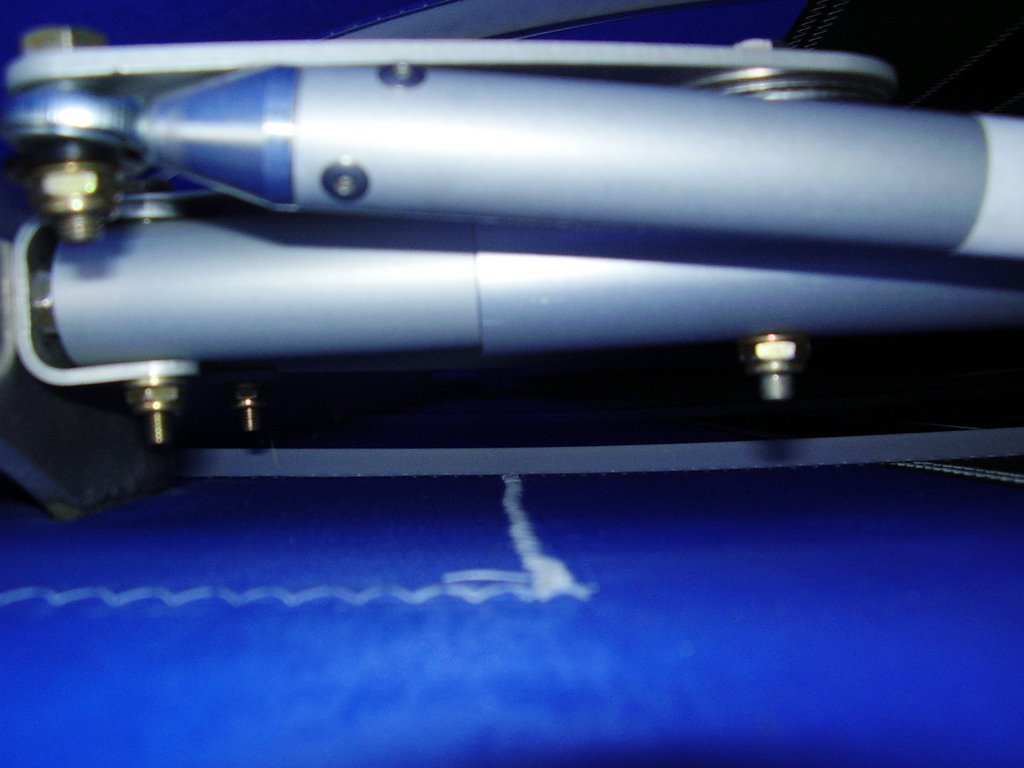
To alleviate this I needed to add a 1/4" Plastic Washer (PW-4) and a 1/4" Thick Washer (AN960-416) between the Bell Crank and the Male Rod End in each wing. Rans recommended that I use 1/4" Zinc Plated Washers (KSHW0075) instead of the 1/4" Plastic Washers. They also suggested I replace the existing 1/4" Plastic Washers that are between the Male Rod End and the lock nut. I also needed to replace the 1/4" Bolt (AN4-7A) with a longer 1/4" Bolt (AN4-10A) to handle two new washers.

With the above fixes, the binding was completely eliminated. Now when the ailerons are fully deflected, there is a distinctive stop instead of a binding/grinding feeling. This stop is caused by the Long Push/Pull Tubes hitting the same Bell Cranks within the wing.

Below are some pictures of the damage that was being done to the Short Push/Pull tubes from the binding. The last picture was taken from inside the wing to try and get a clear view of the binding prior to the fix. Implementing the fix through the zippered portal wasn't as hard as I had thought it would have been. Removing the Short Push/Pull tube was necessary along with taping the 7/16" wrench to a yard stick to hold the bolt head.


Wednesday, August 16, 2006

More Cowl Mockup - 3 hours (320 Total)

Below are some pictures of a more complete mockup of the oil cooler cowl. In the pictures, the two side pieces are reversed to allow for the pieces to be held together with binding clips.

I intend to make the cowl out of 0.032" 6061-T6 aluminum sheeting. The side pieces will have metal tabs that will be folded over to allow for riveting. A 19 row oil cooler will be mounted in the back of the cowl. The leading and trailing edges will have hems folded into them to give them extra strength.


Labels - 1 hour (317 Total)

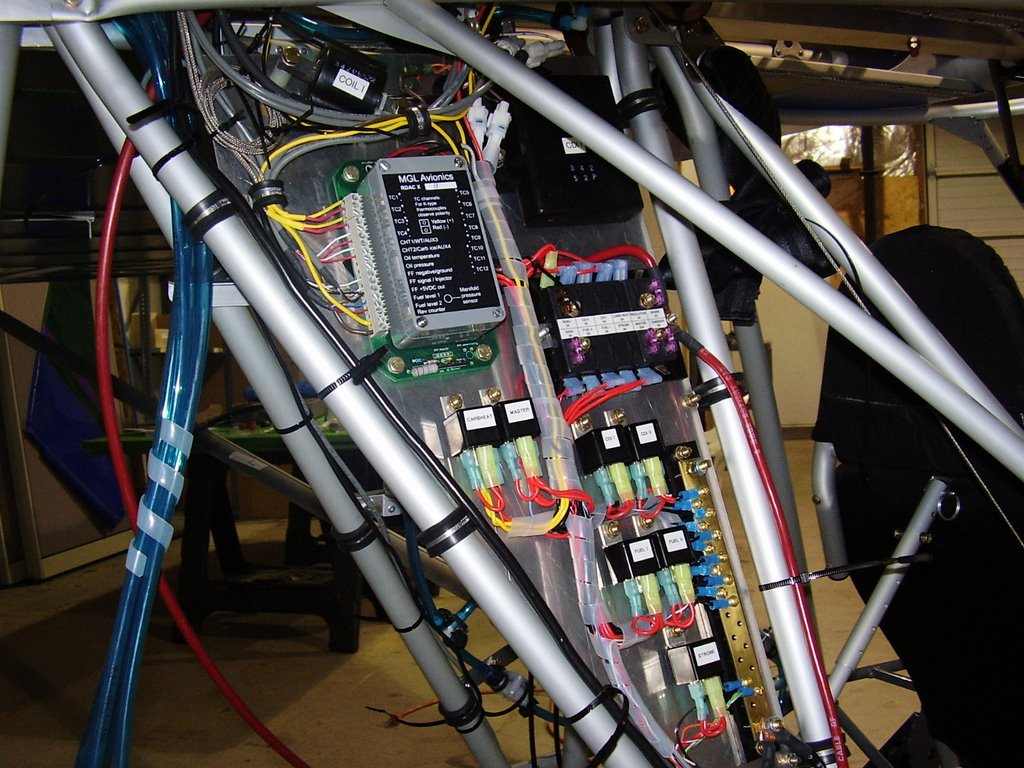
Today I created labels for the major components of the electrical system. I also created labels for the two fuse blocks.